PAAB’s role in funding development and maintenance of water infrastructure
This article first appeared in The Edge Malaysia Weekly on April 14, 2025 - April 20, 2025
THE constant flow of water from our taps is often taken for granted. But beneath the surface, a lot has changed over the past 20 years to ensure the sustainability of the country’s water assets.
At the heart of this transformation is Pengurusan Aset Air Bhd (PAAB), an entity under the Minister of Finance Inc, set up solely to finance and develop the water infrastructure in Peninsular Malaysia and Labuan.
Established in May 2006 following the enactment of the Water Services Industry Act 2006 (WSIA), PAAB has quietly become the cornerstone of Peninsular Malaysia’s water security, steering a multi-billion ringgit overhaul of the water infrastructure to ensure the sustainability of the water operators and assets.
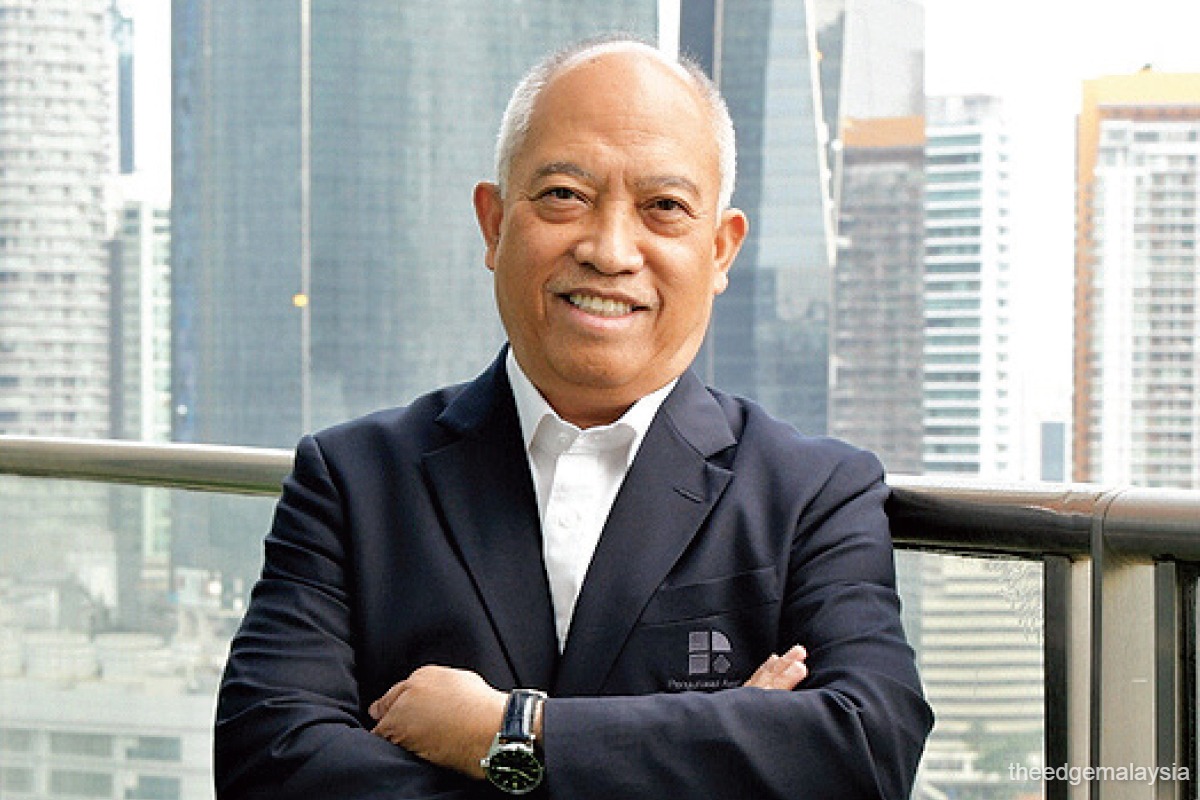
In an exclusive interview with The Edge, PAAB CEO Zulkiflee Omar says the firm’s main role is to provide water operators with the “most economical and sustainable” funding.
“For tariffs and regulation, the National Water Services Commission (SPAN) is the regulator of the water industry. At PAAB, our role is to provide the most competitive funding compared to any financial institution. So far, since the establishment of PAAB, there is no other financial institution that can beat PAAB.
“The funds that we provide are meant to construct water assets that include refurbishment, improvement, upgrading, maintenance and repair. It’s not only building a new one (asset),” he says.

Zulkiflee adds that PAAB’s financing stretches over a period of 45 years through lease agreements with water operators. “This is because water assets can last more than 50 years, and it is more sustainable for water operators as the fees are lower and ease their burden. By the end of the tenure, we will return the asset ownership to the water operators.”
Fragmented sector
Prior to PAAB’s inception in May 2006 the country’s water management was fragmented, with each state having different approaches to water management.
Particularly in Selangor, before the restructuring and consolidation of the water services industry, the state governments entered into a build-operate-transfer (BOT) mechanism with private-sector players to invest in and operate water treatment and distribution, which resulted in a fragmented industry. It often resulted in varying degrees of quality of water supply and services in each state, with many facing financial constraints to undertake crucial water projects. Because of high operating costs, private concessionaires required commensurate tariffs to cover their cost and make profit.
In Selangor, the state government did not always allow water tariffs to be increased at the risk of raising the ire of consumers. This resulted in underinvestment in the water sector, leading to several state-wide water disruptions.
As a result, both the state and federal governments agreed to renationalise the water sector through WSIA, making water management the shared responsibility of the two levels of government.
The Act encapsulates the objectives of the water sector reforms of the mid-2000s, the primary aim being to ensure the sustainability of the country’s water infrastructure. The government realised that there were funding gaps in the water industry, and that the situation was no longer sustainable — they needed financial means to maintain and upgrade their water infrastructure.
“Previously, the water industry was under the state government, so the federal government didn’t get involved. As such, there were no (standardised) KPIs, quality was inconsistent, and the requirements of specification and standards were not the same.
“At that time, when the state government wanted to do water-related projects, they (water operators) didn’t have the money, so they had to take out loans to build water assets worth billions of ringgit, and they couldn’t pay [the debt],” says Zulkiflee.
Uphill transformation journey

Nevertheless, for water operators to tap into the PAAB scheme, they have to transfer some of their assets, especially the ones with outstanding federal loans, to PAAB. It has not been a smooth transition. It took almost 15 years for PAAB to get all the state operators — except for Terengganu’s — to migrate their water supply assets. The first state that migrated its water assets was Negeri Sembilan, with Kedah being the latest in 2021.
Meanwhile for Selangor, the state and the federal government had been on opposing sides from the 12th General Election in 2008 until GE14, which contributed to the delay in the restructuring of the state’s water infrastructure. One can relate to the challenges PAAB faced during the long-drawn-out saga between Selangor and the federal government involving the consolidation of four water concessionaires — Puncak Niaga Holdings Bhd, Konsortium Abbas Sdn Bhd, Syarikat Bekalan Air Selangor Sdn Bhd (Syabas) and Syarikat Pengeluar Air Selangor Holdings Bhd (Splash).
Pengurusan Air Selangor Sdn Bhd was eventually formed and in 2015, it signed an agreement with PAAB, with the latter releasing up to RM2 billion to the former. According to PAAB’s annual report, Air Selangor migrated RM10.5 billion worth of assets to PAAB.
Zulkiflee says the migration of water assets to PAAB reduces the water operators’ debt burden as the agency assumes their loans. In return, the state water operators lease the assets from PAAB. However, not all water assets were transferred to PAAB. In addition, the agency is not involved in water catchment as water resources are tied to the land, which falls under the purview of the respective state governments.
With PAAB taking over the water assets, the states’ water operators then lease the assets from it.
Zulkiflee says PAAB only took over the assets that are still indebted and restructured the repayment over 45 years. “Only some assets were migrated to PAAB, and each state has a different agreement and asset migration size. We then lease the assets to the state water operator for 45 years. We don’t give loans.”
PAAB owns only 30.5% of the water infrastructure and 25.6% of the water pipelines across Peninsular Malaysia and Labuan.
When asked about Terengganu’s migration to PAAB, Zulkiflee says, “The reasons for non-migration often vary, with financial independence being a key factor. For Terengganu, the state may have a strong financial position to finance its water infrastructure and operate independently.”
In May 2022, Terengganu Menteri Besar Datuk Seri Ahmad Samsuri Mokhtar said the state’s decision to not sign the Water Services Industry Restructuring Agreement was final.
RM18 billion projects in the pipeline
As at Dec 31, 2023, PAAB had total assets of RM33.3 billion compared with RM9.98 billion in 2013, following the migration of assets from Selangor, Kelantan, Kedah and Pahang. In 2023, PAAB said its lease income of RM1.1 billion resulted in a return on assets of 3.2%.
The lease income is used to service the debts assumed by PAAB, as well as new debts raised to fund the capital expenditure (capex) for water assets and new asset development.
Since the migration, some states have seen improvement in their water reserve margins. For instance, Selangor, which had a reserve margin of 0% in 2019, saw the figure jump to 13.4% in 2023. This could be due to the ongoing Langat 2 Phase 1 (L2P1) water treatment plant project worth RM4.3 billion that has the capability to deliver 1,130 million litres per day (MLD) of treated water to 440,000 consumers.
The L2P1 project involves water treatment and distribution facilities, with raw water being transferred from the Pahang-Selangor Raw Water Transfer project. It has an ultimate nominal treated water output capacity of 2,260 MLD serving customers in Hulu Langat, Ampang, AU3, Kuala Lumpur, Cheras, Sungai Besi, Bukit Jalil, Petaling and Puchong.
As at December 2024, PAAB had concluded RM7.47 billion worth of water-related projects, including the construction and upgrading of 21 water treatment plants with a total capacity of 2,081 MLD, the construction of 42 reservoirs with a total capacity of 981 million litres, and completed 2,808km of pipe replacement and new connections.
“Currently, in Malaysia, the average reserve margin is about 15%. If not for these projects, I think it would be less than 10%. So, we are helping the country to improve its reserve margins,” he says.
On average, Peninsular Malaysia’s water reserve margins stood at 15.3% in 2023, higher than the 11% in 2018. The states with the highest water margins are Perak at 28.4%, followed by Terengganu at 27.5%, and Penang at 25.6%.

According to Zulkiflee, PAAB estimates that there will be RM18 billion worth of water-related projects in the pipeline in the next 10 years. They are currently in the planning stage and will be funded by PAAB. “We not only provide the financing for the projects, we are also involved as the project manager, meaning we call for tenders and award the packages to contractors.”
Having said that, PAAB has its own central purchasing contract specifically for pipe replacement projects, which was set up in 2019. This is in line with the government’s plan to improve the NRW level in the country (see sidebar).
Nevertheless, in terms of planning, Zulkiflee says the process would involve a water state operator forecasting its supply and demand, and that the plan will need to be approved by SPAN for the setting of water tariffs.
He says the water assets that were transferred to PAAB by water operators following their migration would see a consistent lease rate throughout the 45-year tenure.
However, the treatment is different for new projects. “In some of the agreements, we can raise the lease payment every three years. But because the agreement is a bit loose, we have to mutually agree on how to gradually raise the lease payment for new projects. Because how do they do it if they can’t raise the tariff?
“In a way, for the first five to 10 years, we actually subsidise the water operators. We should make it back from year 11 onwards. We can’t charge the water operators too high at the early stages because it wouldn’t be sustainable (for them),” Zulkiflee says.
Save by subscribing to us for your print and/or digital copy.
P/S: The Edge is also available on Apple's App Store and Android's Google Play.
The content is a snapshot from Publisher. Refer to the original content for accurate info. Contact us for any changes.
Related Stocks
| PUNCAK | 0.220 |
Comments