Rafizi warns Malaysia risks breaching 65% debt ceiling as debt service costs soar, wiping out subsidy savings
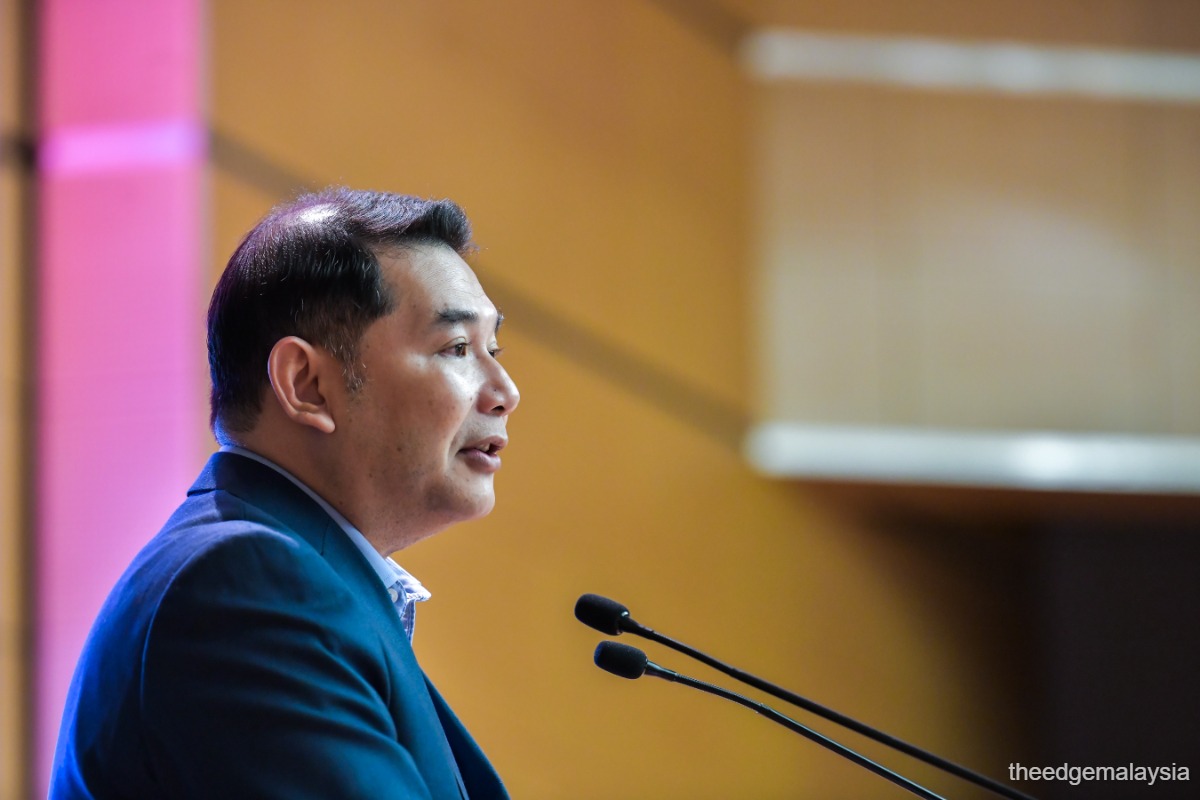
“We cannot continue making major reforms that affect the people’s livelihoods in the name of fiscal consolidation, while debt management — from projections to bond issuance — remains confined within the Treasury without sufficient scrutiny or parliamentary debate.” – Datuk Seri Mohd Rafizi Ramli
KUALA LUMPUR (Oct 13): Malaysia's efforts to save billions through subsidy cuts are being wiped out by soaring debt service costs, said Pandan Member of Parliament Datuk Seri Mohd Rafizi Ramli, as he warned that the nation is at "real risk" of breaching its debt ceiling of 65% of gross domestic product (GDP) due to this sharp escalation in debt service payments.
While the government said it has made progress in reducing debt levels, actual debt service costs have continued their upward trajectory, increasing by RM17.8 billion from RM40.5 billion in 2022 to RM58.3 billion in 2026, he noted.
The former economy minister said this surging debt burden effectively wipes out the RM18 billion saved from the rationalisation of subsidies and social aid over the same period.
Higher true debt exposure
He cautioned that Malaysia’s true debt exposure is much higher once off-balance-sheet liabilities are factored in.

As of 2024, government guarantees for state-owned entities and public-private partnership projects totalled RM332.8 billion, or 17.2% of GDP.
Major recipients of these guarantees include: DanaInfra Nasional Bhd (RM85 billion); the East Coast Rail Link (ECRL) project (RM50 billion); the National Higher Education Fund Corp or PTPTN (RM41 billion); and Prasarana Malaysia Bhd (RM42 billion).
Malaysia’s total domestic and external debt stood at RM1.3 trillion as of June 2025, equivalent to 64.7% of GDP.
"When combined, the government’s direct borrowings of 64.7% of GDP and guaranteed debt of 17.2% bring the nation’s total debt exposure to around 81.9% of GDP," Rafizi said during his debate on Budget 2026 in the Dewan Rakyat on Monday.
Debt servicing a 'toxic' component
Rafizi described debt servicing as the most “toxic” component of government spending in the year ahead. He noted that of the RM6 billion increase in net operating expenditure, two-thirds, or RM4 billion, will be allocated to paying interest on government debt.
"This means that for every RM1 increase in operating expenditure, 67 sen goes to debt interest payments," he said.
“Simply put, after all the hardship of restructuring the subsidy system to make it more targeted, the savings achieved are being used to pay for soaring debt service costs,” Rafizi added.
Rafizi further warned that Malaysia’s economic growth in 2026 could potentially fall below the government’s lower-end projection of 4%, which would negatively impact fiscal revenue.
“If government revenue in 2026 falls short by more than RM6 billion — which is a real possibility given the RM5.6 billion shortfall in 2025 — revenue growth will continue to lag behind the annual increase in operating costs,” he said.
The Malaysian government has forecast its economy to grow 4.0%-4.5% in 2026.
Call for debt management overhaul
Rafizi is calling for a comprehensive overhaul of debt management policies, asserting that a “business-as-usual” approach is no longer sustainable.
“We cannot continue making major reforms that affect the people’s livelihoods in the name of fiscal consolidation, while debt management — from projections to bond issuance — remains confined within the Treasury without sufficient scrutiny or parliamentary debate,” he said.
He strongly urged the Parliamentary Select Committee on Finance and the Economy to study the issue in detail and ensure that both total debt and debt service obligations are meaningfully reduced.
“The current cautious approach — taking small, incremental steps out of fear of criticism — may be good for the government’s popularity, but it does little to benefit the country.
“It would be unfortunate if, by the end of this administration’s term, the national debt remains above 60% of GDP, continuing the practices of previous governments that first breached the original 55% ceiling,” he added.
For more Parliament stories, click here.
The content is a snapshot from Publisher. Refer to the original content for accurate info. Contact us for any changes.
Related Stocks
| DIN045801028 | 103.500 |
Comments