My Say: Blue, the new green: Diving into a blue future with blue sukuk
This article first appeared in Forum, The Edge Malaysia Weekly on December 29, 2025 - January 4, 2026
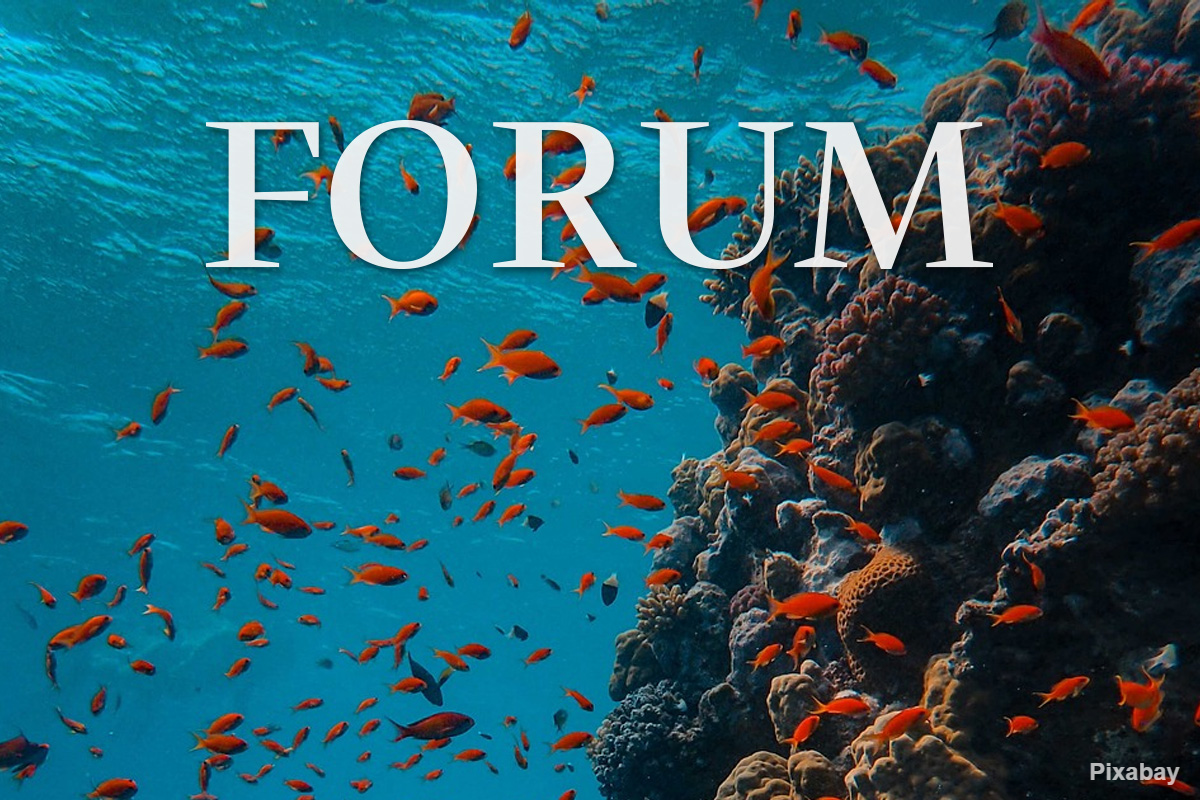
Ever since my first dive in Pulau Perhentian over 15 years ago when I discovered the magical underwater world, I have been captivated. The muffled hush of the world above, just me and nature, and the dance of light over colourful corals and marine life sparked a lifelong passion.
So when the 13th Malaysia Plan unveiled priorities to develop the blue economy in states such as Terengganu, Perak and Sabah, I was thrilled. It was a recognition that Malaysia’s seas and coasts are ecological and economic treasures. The blue economy spans ports, shipping, fisheries and coastal tourism, with under-developed potential.
Another aspect that excites me as a banker is for Malaysia to issue the world’s first blue sukuk, which sets a benchmark for sustainable finance. It capitalises on our leadership in Islamic finance where banking and conservation meet. In line with this vision, Malayan Banking Bhd (Maybank) has signed a memorandum of understanding (MoU) with Sabah to advance blue financing. Developing the blue economy drives inclusivity through sustainability-led initiatives, benefiting locals, particularly coastal communities.
Stakes are real
As a maritime nation with 4,675km of coastline and globally acclaimed dive sites such as Sipadan, Mabul and Redang — names synonymous with biodiversity — Malaysia’s marine resources should form a pillar of economic growth.
According to one estimate by Akademi Sains Malaysia, the blue economy could potentially contribute to 31.5% of gross domestic product by 2030, compared with 21.3% in 2020.
Sabah stands out. With the state being one of Malaysia’s largest fishery producers — contributing roughly 20% of the national seafood supply — it already has the foundation. Untapped opportunities in aquaculture, marine tourism, maritime infrastructure, renewable ocean energy and blue carbon could position it as a leader in sustainable coastal development.
One, however, cannot afford to view the situation through a fogged-up dive mask. Fragmented governance, limited financing frameworks and weak alignment between conservation and commercial priorities need to be addressed.
Coral bleaching, coastal erosion and dwindling fish stocks are visible reminders of how unsustainable practices threaten nature, livelihoods and food security.
Healthy oceans are economic infrastructure. Coral reefs, mangroves and seagrass beds protect coastlines, act as natural flood barriers and sustain fisheries that feed millions. Studies show reefs can absorb up to 97% of wave energy as natural defence. Investing in ocean health is investing in resilience.
The potential for growth is immense, particularly in Asean — home to the Coral Triangle, one of the richest marine ecosystems. Globally, the ocean economy is valued at US$2.6 trillion (RM10.5 trillion) and is projected to reach US$3 trillion by 2030.
Financing the blue shift
It requires capital to turn policy into action for tangible and transparent outcomes.
An evolution of green bonds, blue bonds direct proceeds to ocean- and water-related sustainability projects, aligning with Sustainable Development Goal 6 (Clean Water and Sanitation) and SDG 14 (Life Below Water).
Seychelles pioneered the world’s first sovereign blue bond in 2018, raising US$15 million to support marine protection and sustainable fisheries. Maynilad Water Services in the Philippines issued a PHP15 billion blue bond for water and wastewater projects, followed by Thailand’s East Water with a THB620 million International Finance Corporation (IFC)-backed corporate blue bond to improve water reliability.
Blue bonds make up less than 1% of the US$1.1 trillion global sustainable bond market, according to the Organisation for Economic Co-operation and Development (OECD). Including non-labelled bonds linked to water-related outcomes, the figure expands to US$290 billion — indicating strong investor interest.
Malaysia’s Islamic finance ecosystem — among the world’s most developed — provides a ready platform for innovation. The country was the first to issue the world’s first Green SRI Sukuk in 2017 and a US$1.3 billion SDG Sukuk in 2021 — also the world’s first sovereign SDG Sukuk, which was 6.4 times oversubscribed. A blue sukuk is the next logical move.
Financing frameworks exist to support this shift. The IFC and Climate Bonds Initiative have defined guidelines for blue financing. Locally, the Securities Commission Malaysia’s Sustainable and Responsible Investment (SRI) Sukuk Framework and Bank Negara Malaysia’s Climate Risk Taxonomy can be extended to cover the blue economy.
Reducing non-revenue water
Managing water resources as part of the blue agenda is equally vital. Malaysia’s non-revenue water (NRW) — water lost through leaks and inefficiencies — averaged 37% as at 2023. There is a goal to reduce average NRW to 28% by 2030.
The IFC’s Blue Finance Guidelines even recognise water infrastructure rehabilitation that achieves at least 20% efficiency improvement as eligible for blue-bond financing. This means replacing ageing pipes, deploying smart meters and using artificial intelligence (AI)-driven leak detection technologies are climate actions.
Blue carbon credit trading
Blue carbon credits are another promising initiative in Malaysia, encompassing carbon credits derived from mangrove forests, seagrass beds and wetlands to be traded. This could monetise natural assets sustainably, creating new income streams for conservation and local communities.
These blue carbon credit projects must be supported by strong measurement, reporting and verification systems to ensure credibility and attract private capital.
The IFC’s 2016 Forest Bond offers a useful model — investors were allowed to receive coupon payments in carbon credits. A similar structure could work for Malaysia’s blue sukuk.
To build a robust carbon ecosystem, Malaysia needs to further establish strong legal and policy frameworks, including carbon pricing mechanisms, clear timeline and guidelines, streamlining of permit processes and stronger institutional capacity. Institutional investors also need to consider broadening investment mandates. Having all this in place makes blue finance both viable and mainstream. It is no longer a question of if but when the blue becomes the new green.
I look forward to the day I can take my children diving, to show them pristine waters and flourishing marine life, and discover the joy of being with nature.
Ranita Abdullah is head of ESG strategy and solutions of Group Global Banking at Maybank
Save by subscribing to us for your print and/or digital copy.
P/S: The Edge is also available on Apple's App Store and Android's Google Play.
The content is a snapshot from Publisher. Refer to the original content for accurate info. Contact us for any changes.
Related Stocks
| MAYBANK | 11.760 |
Comments