Solutions: Using plants to extract nickel from soil
This article first appeared in The Edge Malaysia Weekly on January 19, 2026 - January 25, 2026
Phytomining, which is a technique for extracting metals from soil using plants, has regained interest in recent years, owing to demand for critical materials necessary for the energy transition. It is also seen as a more sustainable alternative to mining operations that have significant negative environmental and social impact.
Botanickel Sdn Bhd, a joint venture between two European companies, brought phytomining to Sabah in 2023 and says it was the first to launch this solution in Malaysia.
The plants, called hyperaccumulators, can thrive in metal-rich soils that are often inhospitable for traditional crops. Common examples of hyperaccumulators are sunflowers and Indian mustard. While ordinary flora would perish or be severely stunted, hyperaccumulators can safely absorb and store heavy metals such as nickel, in Botanickel’s case.
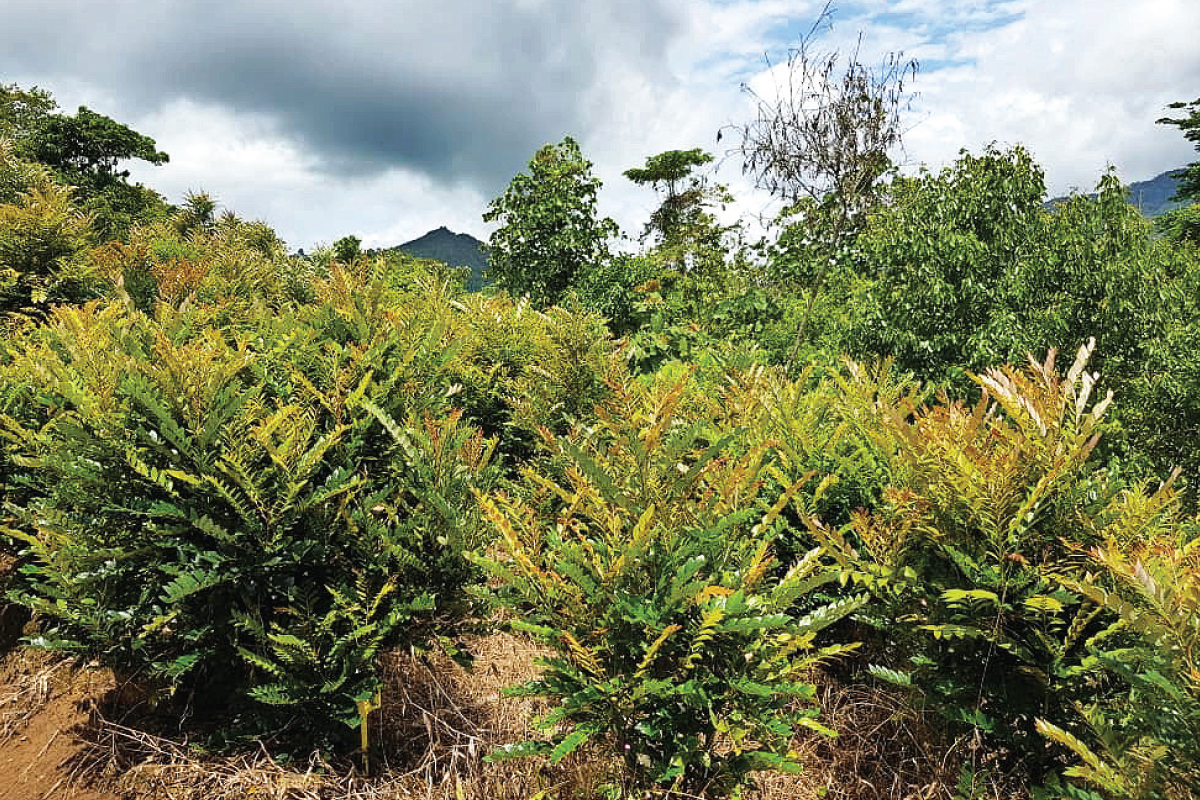
The process begins by cultivating these metal-loving crops in naturally nickel-rich land, such as that in Ranau, Sabah, which has an abundance of ultramafic soil. This soil contains high concentrations of metals and minerals owing to the presence of magmatic rocks. Once the plants reach full maturity, they are harvested, dried and processed into biomass. The biomass will then be processed into bio-ash, which is the end product.
“[The bio-ash] is transported to our facility in France, and we extract nickel from it,” says Dehya Mahadin, managing director of Botanickel.
Botanickel is the Malaysian branch of a joint venture between Aperam, a stainless steel producer headquartered in Luxembourg, and Econick, a French biotechnology spin-off from the University of Lorraine specialising in extracting compounds from soil and water through plants.
The Malaysian company was formally founded in 2023, but Dehya says the research required for a successful process was extensive, with its beginnings dating back to the mid-2010s. Botanickel is also in a long-term partnership with the Sabah government and Sabah Biodiversity Centre (SaBC).

In addition to providing sustainably sourced metals, Botanickel has established a scalable, circular business model to ensure that the environment remains healthy.
“We have another by-product, which is the bio-fertiliser. From the organic part of the ashes, you take out the metal, which is the ferronite nickel, and you’re left with the organic parts that can be returned to the soil and act as bio-fertiliser,” explains Dehya.
The hyperaccumulators can also be burned to generate energy and supply communities with electricity.
Botanickel is working with Tonibung, a non-profit group led by indigenous people, to build mini-pilot projects for renewable energy production.
This form of nickel extraction is considered more sustainable than conventional mining. Dehya points to instances in Indonesia, where mines that are not governed by sustainable principles are susceptible to toxic waste entering the groundwater and poisoning the local communities.
Hyperaccumulator plants can extract excess nickel from the soil to remediate nickel poisoning in areas where farmers experience difficulties in growing their crops due to the presence of excess minerals.
“In 30 to 50 years, the nickel will be absorbed until it’s completely gone, or until the percentage becomes insignificant, so it won’t even affect any future plants. Perhaps after 50 years, when the third generation takes over, they can plant anything on the land because there’s no more nickel [poisoning],” explains Dehya.
He shares that the company works with the local communities, such as those in Kampung Pahu, Pinawantai and Ladang Pahu, where its plantations are located. The farmers are responsible for managing and maintaining the plants for Botanickel, which will then purchase the harvested hyperaccumulators.

Native to Sabah
The Botanickel team in Malaysia has discovered many hyperaccumulators that grow in Sabah, but Dehya says the names of these native species have not been disclosed due to a license agreement with SaBC and protection provided by the Sabah Biodiversity Enactment established by SaBC.
Dehya is also unable to share the exact yield, but he says it is still incomparable to conventional mining. Different species and factors can influence the tonnage of nickel produced, he adds.
The project uses various hyperaccumulator species protected by the Sabah Biodiversity Enactment and that are native to the state, which means that the hyperaccumulators cannot be planted on different or foreign lands.
“SaBC will not allow these plants to be cultivated in Peninsular Malaysia. They are totally protected and endemic only to Sabah. We are looking for an opportunity to expand our operation, so if we have partners in the peninsula and we have access to land that is rich in nickel, we will use different species that are allowed to be planted here,” says Dehya.
Botanickel also has a farm in Greece that spans a few hundred hectares and uses a completely different species from those in Sabah, called the Alyssum murale, he adds.
Aperam, as Botanickel’s main client, incorporates the responsibly sourced nickel into the alloy composition of its stainless steel. The concentrated nickel is sent to Recyco, Aperam’s dedicated European recycling unit, effectively translating its sustainability targets into tangible industrial practice.
Dehya says Botanickel’s biosourced nickel commands a premium price. The buyer, Aperam, is willing to pay this premium because the phytomining process significantly reduces its supply chain’s greenhouse gas emissions, potentially leading to a carbon-negative raw material source.
This also increases the potential for Botanickel and Aperam to reduce greenhouse gas emissions throughout the ferronickel production process and the subsequent manufacturing of Aperam’s stainless steel.
“The emissions of this process is close to zero, and it becomes negative if you take into consideration all the by-products, such as the electricity that you generate and the bio-fertiliser,” Dehya continues.
He adds that this process produces nickel at a 99% purity for commercial use in larger batches, a higher percentage than that produced in a lab setting. However, he is unable to share how much bio-ash has been produced in Sabah since it began operations.
Meanwhile, Econick’s team of high-level experts in the cultivation and treatment of nickel hyperaccumulator plants contribute to the collaboration by ensuring that the project can continue its eco-designed, large-scale metal production for the long term.
With Botanickel pioneering this process, Dehya says one of the company’s goals is to turn the project into an eco-edutourism spot, adding that it is currently working with many different agencies to make this happen.
Save by subscribing to us for your print and/or digital copy.
P/S: The Edge is also available on Apple's App Store and Android's Google Play.
The content is a snapshot from Publisher. Refer to the original content for accurate info. Contact us for any changes.
Comments