Making STEAM appealing
Malaysia has stepped up efforts to boost student participation in science, technology, engineering and mathematics (STEM) to build a pipeline of talent for higher-value industries. However, there is growing recognition that integrating the arts into science-based learning — or better known as the STEAM approach — could help sustain student interest and improve learning outcomes within STEM fields.
In January, Higher Education Minister Datuk Seri Dr Zambry Abd Kadir announced in his 2026 New Year message that the forthcoming Malaysia Higher Education Plan 2026-2035 will broaden the traditional focus on STEM by incorporating the arts into the curriculum, following the need to design programmes that better reflect changing market demands.
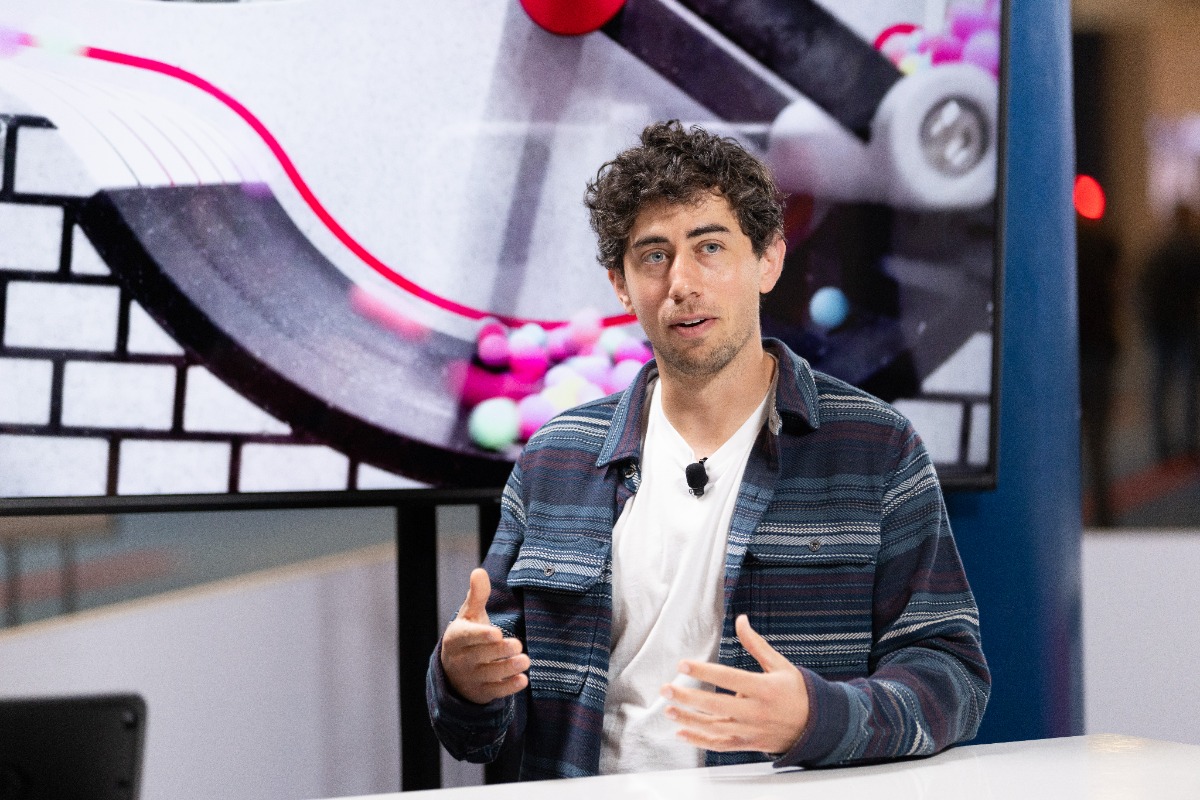
The arts have often been separate from science, but there is an art to STEM subjects such as engineering, because it enables many different ways one can approach a project, said Jay Vogler, a content creator focusing on STEAM-related videos, who spoke to DigitalEdge at the sidelines of the 3DExperience World 2026 convention in Houston in February.
Vogler, through his channels with the handle Engineezy, shares his kinetic contraptions that combine both elements of creativity and engineering ingenuity.
In 2020, he resigned from being a toy engineer and decided to focus on his passion projects, and that journey had led to the sharing of his work online.
In his view, STEM projects could be made more appealing through the integration of arts. The introduction of artistic elements into science and engineering projects could potentially cultivate genuine curiosity in students. This prevents children from associating the academic nature of the activity with something negative, and helps them see the bigger picture when STEM and arts are combined.
STEM elements could also be subtly integrated into classes for art. For instance, Vogler recalled sculpting a figure in a visual arts class during his high schooling years in Canada. Instead of leaving the project as a stationary sculpture, one way to introduce STEM elements in an engaging way would be to have an assignment to build a moving sculpture.
“Bridging that gap without telling or specifically saying we're bridging the gap by creating fun activities that are in the middle, that's something that we can do without pulling stigmas in either direction. We can introduce a little bit of fun, that's what I like to do,” said Vogler.
As someone with a presence online, Vogler also shared his view on how social media and independent creators can organically influence the interest of STEM as well as STEAM in young children.
Short-form content, especially, can be utilised by capturing the attention of everyday users. By stumbling onto well-crafted videos, users could organically open up to subjects or topics that would otherwise be out of one’s interest.
“Sometimes you can get stuck and spend a lot of time there, but there's also some things that are great about [social media], which is that it's introducing concepts to people that they might not have seen. One of the ways that creators do that is we're trying to make [STEM] seem appealing.”
To make his videos more impactful, Vogler himself is finding ways to make his videos more accessible to the masses. For instance, a video made in partnership with SolidWorks inspired him to make a clock out of cans. The simplicity of the idea and the craftiness of its execution were able to hit a broader audience, as well as industry players who were inspired after seeing the video’s inclusion in a newsletter.
“I'm incentivised to get views, so I'm incentivised to be making this stuff look cool, but I have to communicate that. One of the ways that I do that is by stripping it down to the most fundamental things and showing people who didn't think they could understand this stuff, understand what I'm talking about, and that it's actually more accessible than they’ve thought.”
The content is a snapshot from Publisher. Refer to the original content for accurate info. Contact us for any changes.
Comments