Powerwell plugs into data centre surge
This article first appeared in The Edge Malaysia Weekly on September 1, 2025 - September 7, 2025
ACE Market-listed Powerwell Holdings Bhd (KL:PWRWELL) is gearing up to capture a slice of Malaysia’s fast-rising data centre boom, with demand from hyperscale and artificial intelligence (AI)-driven facilities expected to fuel demand for electrical distribution contracts.
Having already secured several projects in Selangor and Indonesia, the Shah Alam-based power distribution specialist sees data centres accounting for more than half of revenue in the near term, while striking a balance between infrastructure and renewable energy (RE) jobs.
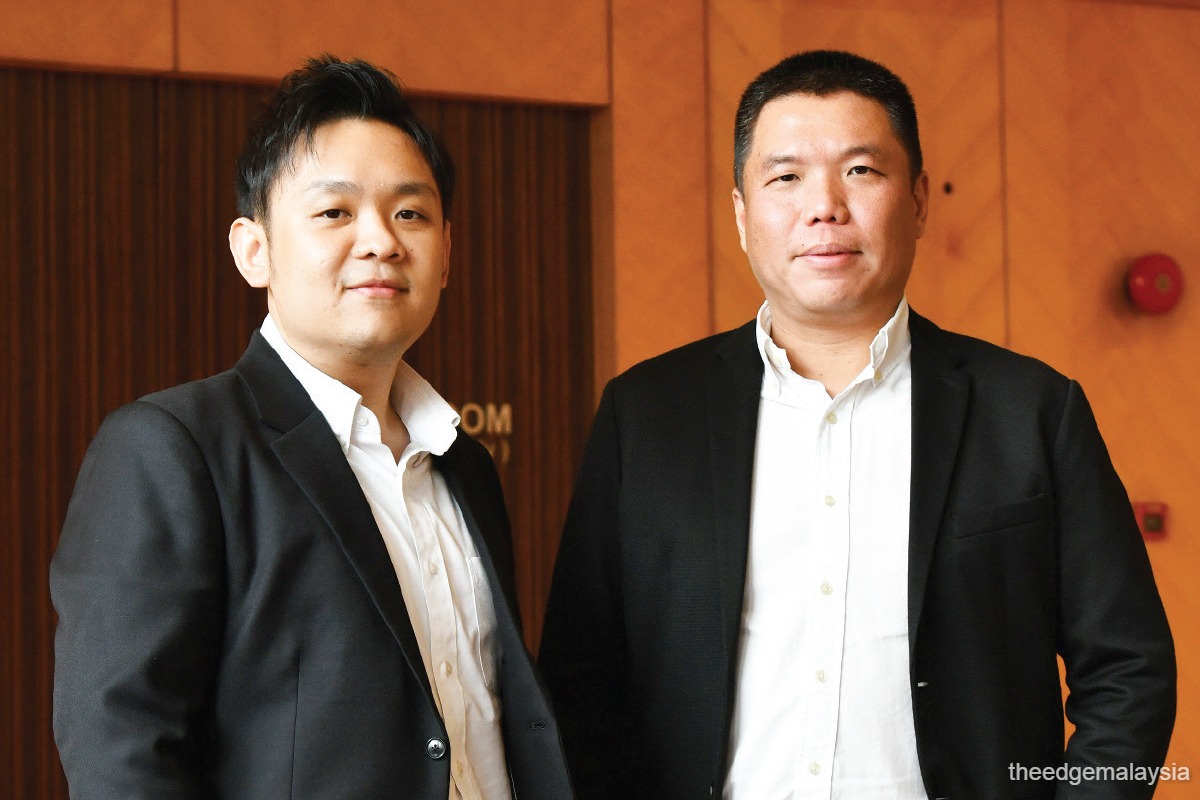
Powerwell executive director Soh Wei Wei highlights that the group is riding on multi-sector tailwinds, namely data centres, infrastructure and RE.
“Malaysia’s hyperscale cloud data centre development is still in the infancy stage. Our country’s construction costs are still lower compared with developed countries. Power intensity is rising rapidly with AI computing needs, and the power redundancy requirements increases with higher data centre tiers,” he tells The Edge in an exclusive interview.
In the medium term, says Soh, record foreign direct investments (FDIs) into Malaysia from semiconductors, pharmaceuticals and high-value manufacturing would benefit Powerwell.

“We still consider ourselves a growth stock as we target to seize the exciting opportunities ahead and deliver earnings growth in the coming years,” he explains.
Asked whether the recent earthquakes in Johor might affect data centre investments in Malaysia, Soh appears unfazed.
“We are relieved that the mild earthquake in Johor did not result in any casualties, injuries or serious property damage. In our assessment, this event is unlikely to impact data centre investment sentiment in the state.
“Data centre operators, particularly multinational corporations (MNCs), typically account for natural disaster risks in their planning and adopt geographical diversification as part of their long-term strategies. They also maintain extensive redundancies and stringent policies to ensure business continuity in any circumstance,” he says.
Soh emphasises that Powerwell recently attained the KEMA Labs Seismic Test Verification and Design Certification, in compliance with the International Electrotechnical Commission (IEC) and the Institute of Electrical and Electronics Engineers (IEEE) standards.
“This certification makes us the first and only low-voltage (LV) switchboard manufacturer in Malaysia to offer earthquake-resistant, seismic-tested switchboards,” he says.
With over three decades of experience supported by an in-house research and development (R&D) team, Powerwell is a homegrown company making LV and medium voltage (MV) electrical distribution equipment, including LV switchboards and MV switchgears.
Powerwell operates its headquarters and manufacturing factory in Shah Alam. The group also has plants in Johor and Indonesia, as well as an office in Penang.
According to Soh, Powerwell’s products are needed to distribute and control electricity in a building, facility or system. “We serve diverse sectors, including data centres, commercial developments, airports, transport infrastructure and RE,” he says.
Notably, Powerwell is a technology partner of Siemens for LV and MV products. “We have access to Siemens drawings and build to spec in-house; Siemens audits us annually. Clients can go for Siemens products (MV and LV) if they want a single European brand or opt for Powerwell LV using European components,” he says.
Powerwell’s data centre clients are mostly MNCs, while its commercial development clients are mainly property developers.
Soh believes the runway ahead for Malaysia’s data centre industry is massive, with 3.6gw of data centres already in the pipeline, and another 3gw to 4gw under the application stage.
“Based on data by BofA Global Research, the research arm of Bank of America, and our own market observation, the value of switchboard and switchgear per megawatt is around US$500,000. This works out to a total addressable market of US$3.5 billion to US$4 billion in the years to come,” he says.
Meanwhile, Powerwell is also involved in the mass rapid transit (MRT) and Johor Bahru-Singapore Rapid Transit System (RTS) Link projects. In the RE space, the group is undertaking large-scale solar projects in Bangladesh.
As at end-June this year, Powerwell’s outstanding order book stood at RM117 million.
Currently, the group’s major projects include a water treatment plant project in Selangor amounting to RM22 million; two data centre projects in Selangor with a combined value of around RM74 million (including RM16.6 million secured in July); the Johor Bahru-Singapore RTS Link project, worth RM9.8 million; as well as a data centre project in Jakarta worth RM8.3 million (secured in June).
“Our tender book is on a rolling basis — as we secure projects and more tenders open up, the figure will be refreshed. At this moment, it is around RM300 million,” Soh says.
He reiterates that Powerwell is currently undertaking four to five data centre projects. Last year, data centres contributed 56% of the group’s turnover.
“Looking ahead, we anticipate data centres’ contribution to stay at 50% to 60% of revenue. We probably won’t let it increase to 70% to 80%, given the promising outlook in other sectors, including infrastructure and RE, while maintaining a balanced exposure across sectors to mitigate concentration risks,” Soh stresses.
Clear earnings visibility
On earnings visibility, he points out that contracts from data centre jobs will be recognised between six and nine months, RE jobs range from nine to 12 months, whereas other commercial projects may take one to two years.
United Fam Sdn Bhd — the private vehicle of Lao Wai Ieng and Tee Joe Ee — is the single-largest shareholder of Powerwell, with a 24.24% direct stake in the company.
Powerwell’s top 30 largest shareholders include managing director Wong Yoke Yen, co-founder and former managing director Tham Kien Wai, Delloyd Ventures Sdn Bhd, Eastspring funds, Principal Lifetime Balanced Income Fund and Tradeview Capital Sdn Bhd.
Soh says transferring to the Main Market is “certainly” part of Powerwell’s plans, and he is actively working on it.
“Two months ago, our institutional shareholding was around 7%. Today, it has increased to 15%. They are private asset management firms, boutique fund houses as well as some foreign asset management firms.”
Soh, 43, holds a 2.75% stake in Powerwell. He joined the company in 2006 as a marketing executive and steadily moved up the ranks before being appointed executive director in July last year.
When Soh joined Powerwell, his background was in IT, not engineering. He entered the mechanical and electrical (M&E) industry in a technical sales role, knowing absolutely nothing about the field. Even so, he persisted, not letting rejection deter him.
“The learning curve was steep, and I had to start from scratch. One of the biggest challenges was getting through to new clients. Many times, they refused to even give me a chance to pitch. So, I would go to their office lobby every day, sit outside and wait for hours — just hoping they’d give me 10 minutes. Sometimes, if I was lucky, they’d feel sorry for me and eventually agree to meet,” he recalls.
Once they became Powerwell’s customers, Soh had to ensure timely project delivery and, more importantly, provide strong after-sales service.
“Basically, the sense of responsibility for each project and keeping promises are the key. That’s how I gain customers’ trust and job continuity for years to come. Last year, I was promoted to the board as executive director of Powerwell — a very sentimental moment for me, for which I am truly grateful,” he says.
Powerwell’s top line eased after peaking in the financial year ended March 31, 2023 (FY2023), but its bottom line has held up. For FY2025, the group reported RM137.51 million in revenue, down 11% from RM154.76 million a year earlier. Net profit came in at RM18.77 million in FY2025, slightly lower than RM19.71 million a year ago.
Margins remained stable, however, at 13.6% in FY2025 versus 12.7% the previous year. In the quarter ended June 30, 2025 (1QFY2026), Powerwell posted RM35.95 million in turnover and RM4.2 million in earnings, with a net margin of 11.7%.
Soh acknowledges that there have been fluctuations in Powerwell’s quarterly performance because of the nature of its project-based business model. While the group secures projects in advance, revenue is recognised only upon delivery to and acceptance by customers.
“Management is aware of this and has been taking steps to address it, including the diversification of industries that we serve, creating a larger revenue base and reducing the revenue concentration of each project. Nevertheless, there will be certain fluctuations going forward; therefore, our full-year results provide a more accurate representation of our performance,” he explains.
As at June 30 this year, Powerwell’s net cash position stood at RM56.8 million, or 9.8 sen per share.
Comparing against peers, Pekat and Swift Energy
Soh says Powerwell has about 200 competitors in Malaysia, but as far as he knows, only two companies are listed, and they are focused primarily on the oil and gas segment.
Powerwell is one of the top three local players in the LV and MV distribution equipment segment.
Over the past six months, its shares have gained almost 30% to close at 54 sen last Thursday, taking its market capitalisation to RM316.4 million. The counter is currently trading at a historical price-earnings ratio (PER) of about 17 times.
In comparison, Pekat Group Bhd (KL:PEKAT), whose stock price had also risen 32% in the same period, is trading at a higher PER of 28.7 times, according to AskEdge.
Meanwhile, shares in Swift Energy Technology Bhd (KL:SET) have declined 14.5% over the last six months and are trading at a PER of almost 19 times.
“Our closest peer that is listed on Bursa Malaysia would be Swift Energy, but we serve different industries. Powerwell serves mainly data centres, transport infrastructure, RE and high-tech manufacturing,” says Soh.
On potential share price upside, he says he leaves that to the investment community, while the company’s management team focuses on business growth and delivering results.
“As we grow, we also plan to continue rewarding our shareholders with dividends, as we have in the past two financial years. Last year, the dividend payout was around 30%, which is something we aim to maintain,” he says.
Save by subscribing to us for your print and/or digital copy.
P/S: The Edge is also available on Apple's App Store and Android's Google Play.
The content is a snapshot from Publisher. Refer to the original content for accurate info. Contact us for any changes.
Related Stocks
Comments