Taking Malaysia Airlines to the next level after turbulent years
This article first appeared in The Edge Malaysia Weekly on November 24, 2025 - November 30, 2025
NATIONAL carrier Malaysia Airlines Bhd is entering a new chapter, marked by new leadership and a wave of strategic investments.
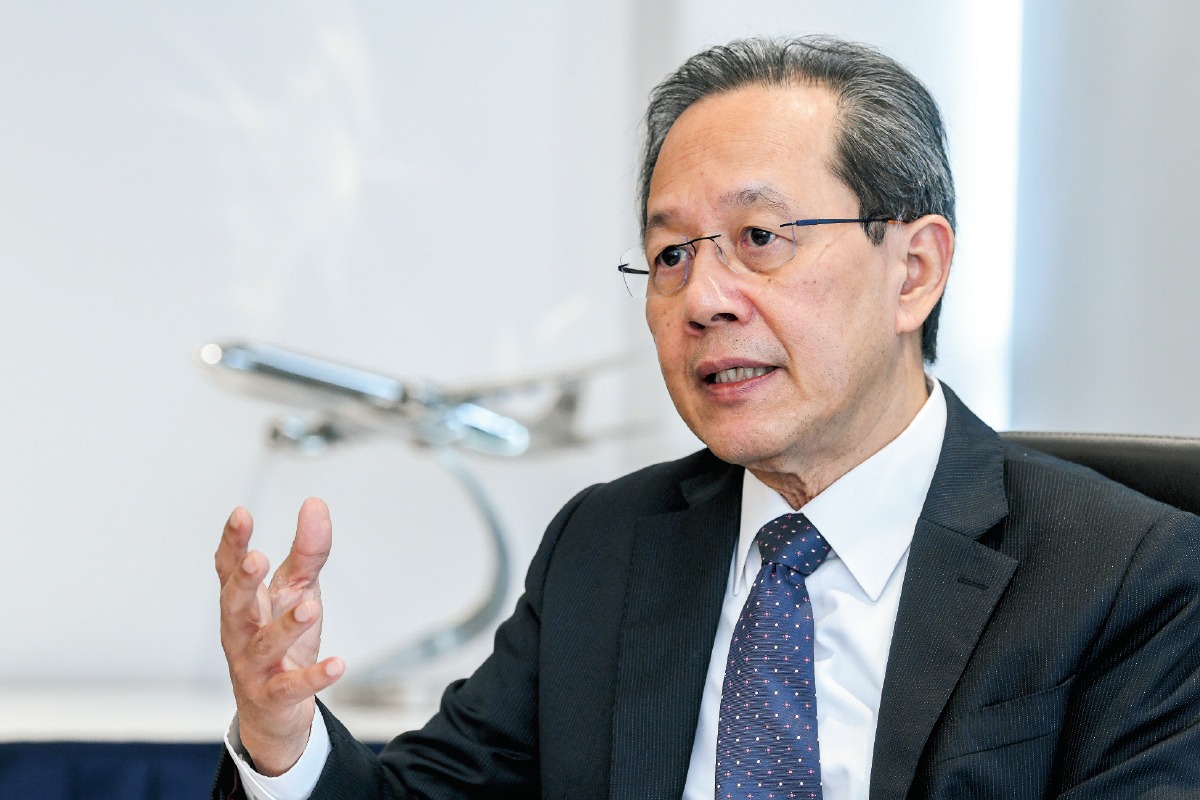
Malaysia Aviation Group Bhd (MAG), the parent company of Malaysia Airlines, announced that Datuk Captain Izham Ismail will retire as group managing director early next year. He has led the airline group for the past nine years, steering it through some of the most challenging periods in its history. Izham, the longest-serving group MD, will be succeeded by Captain Nasaruddin A Bakar, Malaysia Airlines’ chief operating officer (COO), on Jan 31.
Izham, 64, assumed the top job at Malaysia Airlines in December 2017. At the time, the airline faced persistent profitability challenges, the prospect of a sale to secure its future and high leadership turnover. Before his appointment, Malaysia Airlines had been led by two non-Malaysian CEOs — German national Christoph Mueller and Irishman Peter Bellew — following its “hard reset”, which saw the airline transitioning to a private company in 2015.
Izham’s tenure also coincided with the Covid-19 pandemic, where he played an instrumental role in steering MAG through a 2021 restructuring. This exercise saw the group reduce its liabilities by over RM15 billion, eliminate RM10 billion in debt, and secure a RM3.6 billion capital injection from its controlling shareholder, Khazanah Nasional Bhd. MAG then returned to profitability in 2022 with an operating profit of RM540 million, and in 2023 logged its first net profit since the 2015 reset.
The group is now on track to deliver a third consecutive year of net profit and a fourth year of operating profit.

MAG reported a 39% year-on-year (y-o-y) increase in net profit for the first half of 2025, driven by a stronger ringgit, favourable fuel prices and improved operational efficiency from a newer fleet. Capacity, measured in available seat kilometres (ASK), grew 7% y-o-y, supported by fleet and network expansion.
Despite the encouraging numbers, Izham remains cautious. “While the numbers look promising, we are going through an audit process. There may be unknown variables that come up, like write-offs. I don’t know,” he tells The Edge in an interview.
MAG posted a net profit of RM64.66 million for 2024, sharply lower than the RM766.19 million reported a year earlier. The decline was largely due to an 18% reduction in capacity in the fourth quarter of 2024. Even so, the group stayed in the black, supported by a RM426 million reversal of asset impairments initially recognised during the pandemic in 2020.
Izham notes that the first 11 months of 2025 were not without challenges, pointing to persistent supply chain constraints, including parts shortages and delivery delays. “However, we took comfort in tailwinds such as low jet fuel prices and stable foreign exchange between the ringgit and the US dollar,” he says.
International Air Transport Association data shows the global average jet fuel price slipped 1.4% y-o-y to US$97.67 per barrel on Nov 14. The ringgit has gained 7% y-o-y to close at 4.15 against the US dollar on Nov 19.
“The 18% reduction in network capacity in 4Q2024 affected market confidence in the first and second quarters of 2025, which put us slightly behind our revenue budget. But around the middle of 2Q2025, we saw an aggressive ramp-up in revenue across the group. The progress so far, up to November, has been strong,” Izham adds.
While there may still be some pain — supply chain challenges will likely continue — MAG is focused on steadying its operations and investing for future growth.
“With our eyes wide open, we invested heavily in the past nine months. These investments were directed towards enhancing customer experience and improving maintenance to address reliability issues and strengthen safety credibility.”
He highlights the impact of unscheduled engine removals — which require aircraft engines to be removed for maintenance earlier than planned and force the airline to lease replacement engines — a move that affects earnings.
The MAG board has selected Nasaruddin, 51, as its next president and CEO to lead the group’s next chapter of growth. He will be tasked with steering the group towards greater stability as supply chain woes continue to unsettle airlines.

A homegrown talent, Nasaruddin began his career with Malaysia Airlines, where he built a 30-year track record across flight operations, management and strategic roles within MAG. His experience includes serving as human factors manager in the flight operations department, chief flying instructor and head of training at MAB Academy Sdn Bhd. He was COO of MASwings Sdn Bhd from November 2020 to December 2023, and has been serving as COO of Malaysia Airlines since January 2023.
“The focus in 2026 is mainly on stabilising and strengthening our fixed costs, such as staff costs and contractual obligations with service providers, to ensure we maintain a lean cost structure moving forward. The group has been pushing aggressively towards productivity-driven performance for our employees,” says Izham.
MAG now employs 14,000 staff, up from 12,000 post-Covid-19. “At 12,000, it was too small,” he says.
In 2023, Izham took the bold step of ending the group’s 25-year-old in-flight catering partnership with Brahim’s Holdings Bhd, citing the need to part ways with a partner “that was operationally inefficient and attempted to raise meal and handling charges to compensate for that inefficiency”. The switch to new catering service providers initially drew public backlash due to temporary flight disruptions, but it has since been viewed as a necessary step to resolve long-standing legacy issues.
The road ahead: Challenges for the successor
Industry experts and analysts say MAG has been steered in the right direction under Izham’s leadership and they seem hopeful that most of the troubles of the past few years are behind the group.
“The new CEO’s priority will be to enhance both operational and financial performance, in addition to driving route development,” says one industry expert.
Shukor Yusof, founder and analyst at aviation consultancy Endau Analytics and a long-time critic of Malaysia Airlines, notes that Izham has left behind a relatively strong balance sheet for his successor.
“MAG’s current balance sheet is far more formidable than it was five years ago. The restructuring undertaken during Covid-19 helped significantly, and that was primarily Izham’s doing. He laid the foundation for MAG’s present fiscal standing,” he tells The Edge.
“Under Izham’s helm, MAG has turned around. I see a genuine desire to improve, to be better and to acknowledge its shortcomings.”
Shukor believes one of Nasaruddin’s major challenges will be FlyFirefly Sdn Bhd, which continues to lose money and weigh on the group’s overall performance. The budget arm’s net loss widened to RM102.77 million last year from RM19.17 million in 2023.
Firefly has faced intensifying competition from low-cost rivals like Capital A Bhd’s (KL:CAPITALA) AirAsia and Singapore Airlines Ltd’s (SIA) Scoot.
“Firefly cannot compete with budget airlines such as AirAsia and it is operating an ageing fleet of Boeing 737-800 aircraft. They still have not figured out its proper market positioning. At the same time, management cannot simply dispose of Firefly because then the group would no longer have a low-cost carrier. But they do need to re-evaluate its business model,” says Shukor.
Responding to this, Izham says: “Firefly will continue operating over the next three to four years in its current form, using turboprops out of Subang Airport and jets out of Kuala Lumpur International Airport. It will remain a feeder airline to Malaysia Airlines at KLIA, carrying traffic from secondary cities in Asean into the main Malaysia Airlines network, while also serving the community by connecting domestic Malaysia out of Subang Airport.”
As for his impending departure, Izham says the timing is right for him to step aside.
“I strongly believe it is time for me to retire and inject new energy into the business. When a leader stays too long, the organisation can stagnate because everything pivots around that one person. To generate fresh ideas and enthusiasm, the current leader has to step aside and make way for new leaders and a renewed leadership team that is excited about the future and is full of energy,” he says.
Asked about his retirement plans, he replied with a laugh: “Go fishing.”
Below is an excerpt from the interview with Izham.
The Edge: How has passenger yield, a measure of flight profitability, been holding up in 2025?
Datuk Captain Izham Ismail: I would say we are close to budget.
SIA posted a nearly 68% drop in net profit to S$239 million for the six months ended Sept 30, 2025, due to intensifying competition, lower interest income and losses at Air India. Would heightened competition similarly squeeze MAG’s margins?
The difference between SIA and MAG is that SIA’s yield is impacted because its return on capital (ROC) is higher. They invested a lot. At this stage, our ROC is still small. A 1% movement in yield doesn’t really hurt us. Currently, an erosion of 1% to 2% is still manageable. Even at minus 6%, we would still be okay. But in the next few years, [when we take delivery of more new aircraft,] we will be in the same position as SIA. That is why it is important for MAG to up its game and fly to the right places.
How much of the RM3.6 billion capital committed by Khazanah under the 2021 debt restructuring has been utilised?
We have yet to draw down the remaining RM1.97 billion. We’ve been using self-generated funds. We may use it for down payments on new aircraft orders.
There seem to be fewer incidents of flight delays and cancellations by Malaysia Airlines in recent months. Have the technical issues been resolved?
I am pleased that over the past 12 months, the team has worked aggressively to stabilise operations. Civil Aviation Authority of Malaysia data shows Malaysia Airlines’ on-time performance (OTP) improved to 86.9% in August 2025 (from 69.8% at the start of the year). Our customer satisfaction index (CSI) stands at 84% year to date (YTD), our net promoter score at 36 points (a score over 50 is considered exceptional) and technical dispatch reliability at 99%.
The benefit over the last year also came from the work done with partners such as GE Aerospace. We embarked on quick-turn (QT) engine processes, which yielded results. QT engines give us two to three years of operation before overhaul.
Capacity remained on budget, with only minimal cost corrections. Capacity has now recovered from the 18% cut in 4Q2024 and is above pre-reduction levels, supported by new aircraft and faster engine turnaround. This enabled us to mount new flights such as Paris and Brisbane, and increased Sydney and Melbourne frequencies and daily Trivandrum services from a fifth weekly service.
Still, MAG and the industry continue to be impacted by supply chain challenges. Some partners like GE Aerospace and MTU Maintenance have shown strong support and have turned around our engines in record time. Spare engine levels for the Boeing 737-800NG fleet are expected to fully recover by the end of this year.
I must acknowledge the support from GE Aerospace and MTU Maintenance in stabilising our 737 operations.
Unfortunately, other OEMs (original equipment manufacturers) such as Pratt & Whitney have shown minimal improvement from last year. Pratt & Whitney engines affect our older generation A330-300 aircraft. Spare engine availability globally is low — only three or four airlines use the Pratt & Whitney PW4000 engine on their wide-body aircraft including Malaysia Airlines. MAG continues to push at all leadership levels for Pratt & Whitney to improve their situation.
Even with engine shortages, we do not compromise on safety and fully follow OEM guidelines. Our target is always to have sufficient serviceable and spare engines to support the network and ad hoc needs.
It has been five years post-pandemic, yet OEMs are still facing supply chain issues. Based on financial performance, aircraft engine manufacturers like GE Aerospace, Pratt & Whitney and Rolls-Royce are reporting strong earnings, while airline margins remain thin. There is a disconnect. How can someone with issues of supply chain gain so much?
What has changed?
We implemented an intensified fleet-reliability strategy, shifting from predominantly reactive maintenance to a preventive and eventually predictive approach, supported by detailed forward planning and data forecasting. For example, predicting engine and component life. Last year, some overhauled parts or rotables were returned to us and subsequently failed again. Now, returned components are closely monitored, including at OEM source level.
We also added processes beyond regulatory requirements, such as more frequent engine borescope inspections and engine washes. Engineers have been retrained with OEMs, and we expanded our pool of technical talent. We reinforced end-to-end maintenance processes and rolled out a robust fleet improvement programme, supported by external experts from the OEMs. This has enabled proactive issue detection and minimised disruptions.
Manpower remains a challenge. We continue to onboard engineers and technicians, both experienced and new, but, you know, there is still an industry-wide shortage of skilled workers. Not only in Malaysia, but globally.
Malaysia Airlines’ challenges from supply chain disruptions included a hold-up in new aircraft delivery. Has things improved?
Boeing has done a tremendous job. The 737-8 deliveries have been punctual — sometimes early — based on the rebased delivery schedule and of good quality. To date, 14 aircraft have been delivered, with four coming next year and the remaining in 2027.
As for Airbus, however, we still face some issues with delivery. Currently, it is facing delays of three to four months from the rebased timeline. This affects our product proposition and Malaysia Airlines is forced to extend the life of three A330s because of the delayed A330-900neo deliveries. Supply chain issues are again the main reason, Airbus says. So far this year, eight A330neos have been delivered, with the ninth in December. The 10th has been pushed to next year.
Customer response to the A330neo has been very positive, so it is a shame that Malaysia Airlines cannot progress aggressively due to the delayed delivery of the planes.
In my view, OEMs need to relook at structural issues in the supply chain. Airline margins are 1% to 2.5%, while OEMs report strong earnings. Most airlines still face aircraft-on-ground issues. Malaysia Airlines, for example, still has one or two aircraft grounded awaiting engines — though planned.
How far has MAG come in its goal of becoming a premium airline on par with Singapore Airlines, Emirates and Cathay Pacific?
Premium remains our ambition. Our CSI stands at 84% YTD, covering 12 touchpoints — from web check-in to lounge and in-flight experience and our loyalty programme. The airline business contributes about 70% to MAG, while the remaining 30% comes from non-airline units such as MRO (maintenance, repair and operations), ground handling, cargo and catering.
We aim to stay in the premium segment, but not the luxury end — meaning no bars in first class or overly extravagant products. We want a balanced approach, and to a certain degree, we must go to market with a very level-headed mindset. Hardware products such as seats and aircraft take time to develop. So, the area we are focusing on very hard now is the soft product. Notwithstanding this, Malaysia Airlines must continue to be efficient in terms of OTP, aircraft reliability, comfortable seats, good, tasty food and so on. That journey doesn’t happen overnight. It takes time.
If you look at most major airlines, they take five to eight years to drive a premium product, from concept to ordering aircraft and delivery. We began this journey in 2022, after the financial restructuring enabled us to invest. Before the reset, we simply didn’t have the funds to do so.
More importantly, whatever we do must deliver a sound ROC. We recognise that competing in the same space as airlines like SIA, Emirates and Qatar Airways will be tough, but those markets offer stronger yields.
Domestic and Asean markets are highly price-sensitive and there are already too many low-cost carriers. Therefore, our focus will continue to shift towards higher-yield international routes, from India to Australia, and the UK to Australia and Asean. Does that mean we will withdraw from domestic routes? No, but we are becoming less focused on the domestic market.
But to succeed in that market, our premium product must be strong. Premium positioning requires both hardware and software, and that takes time.
At Malaysia Airlines Golden Lounge at KLIA, we are still in discussions with Malaysia Airports Holdings [regarding rental rates and the scope of customers we can serve]. We believe that our Golden Lounge must serve both Malaysia Airlines and oneworld Alliance partners, with the latter being particularly important.
Do problems such as the aerotrain, water leakage and power outages at KLIA affect MAG?
Yes, they do. These issues impact the qualitative side of our operations — the soft product. Our OTP is also affected. The frequent disruptions of the baggage handling system and aerotrain services negatively affect our overall efficiency.
Is now the right time to leave?
You know, there is no work that is ever completely done, but the journey continues. I strongly believe it is time for me to retire and inject new energy into the business. When a leader stays too long, the organisation can stagnate. To generate new ideas and enthusiasm, the leader has to step aside so new leadership can take over. It is the right time for me to step aside and let people grow.
MAG has a robust succession plan in place down to the manager level. Candidates, both internal and external, were evaluated through a process driven by the board. I cannot disclose the exact number of candidates considered, except to say that there were more than three.
Could new management derail what you have built?
The management team shares the same ambition. The strategy was developed collectively, not by one individual. All they need to do is execute it well. Do they need to make changes along the way? Yes. Market dynamics shift daily. They must navigate crises and implement cost corrections depending on economic conditions.
I am stepping aside partly to put the organisation in a healthy state of anxiety — to keep them on the ball. Otherwise, they might become too comfortable knowing that I am still around. The strong performance of the last four years has led the organisation into a comfort zone. I need to disrupt that comfort to keep the team alert and proactive.
Will you take on the MAG chairman role, left vacant after Tan Sri Wan Zulkiflee Wan Ariffin stepped down in September 2024?
No, that would be a wrong move. A former CEO becoming chairman could cause the new CEO to second-guess himself. I should not be on the board. The organisation needs new thinking and independence.
Save by subscribing to us for your print and/or digital copy.
P/S: The Edge is also available on Apple's App Store and Android's Google Play.
The content is a snapshot from Publisher. Refer to the original content for accurate info. Contact us for any changes.
Related Stocks
| CAPITALA | 0.430 |
| CAPITALA-LA | 1.590 |
| CAPITALA-WA | 0.235 |
Comments