Solutions: Improving workflow efficiency
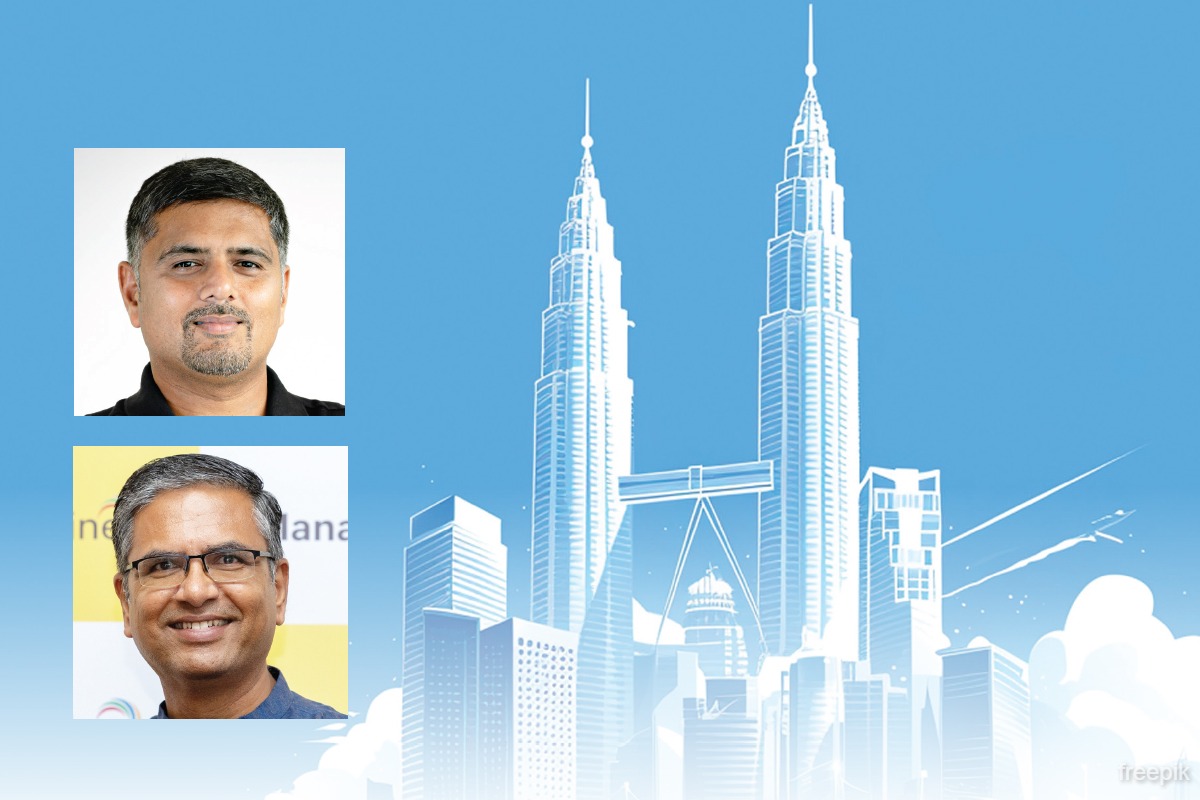
This article first appeared in Digital Edge, The Edge Malaysia Weekly on March 9, 2026 - March 15, 2026
IT management solutions are often costly, complex and time-consuming to deploy. Traditionally designed with large enterprises in mind, such systems have left small and medium enterprises (SMEs) with fewer accessible options.
Many SMEs have turned to open-source software as a lower-cost alternative, but while licence fees may be cheaper — or, in some instances, free — these tools still require technical expertise to implement and maintain, relying on in-house capabilities or community-based support.
Companies are increasingly turning to integrated business applications to bridge collaboration gaps across departments. These platforms are designed to help teams work more seamlessly and stay connected across functions.
By supporting automation in day-to-day workflows and streamlining service management and IT operations processes, such tools make communication more efficient, structured and accessible across the enterprise.

“One gap that is somewhat universal until today is the very disjointed approach where multiple tools are used by IT teams to manage their IT operations. It is especially prominent post-Covid,” says Arun Kumar, vice-president of revenue operations at ManageEngine Pvt Ltd.
This disjointed approach became even more evident during and after the pandemic when organisations rushed to accelerate digital transformation. As workloads shifted to the cloud and “bring-your-own-device” policies became commonplace, ensuring seamless data flow across distributed workforces grew increasingly complex.
“In this day and age, you have to ensure business continuity happens. You have to make certain additions and look at the long-term strategy. Things like moving certain things on the cloud, enabling ‘bring-your-own device’ models to employees. Because what matters today is there should be data flow. There should be continuity for employees to work,” says Arun.
While such structured IT environments are common among large corporations, they are less common for SMEs, he adds.
According to the Malaysia Digital Economy Corporation (MDEC) in its Belanjawan 2026: Digital Economy Snapshot report in 2025, more than 60% of Malaysian businesses remain at a basic level of digitalisation, indicating a substantial readiness gap particularly among SMEs and rural entrepreneurs.
This underscores the need for sustained interventions addressing both capability and accessibility challenges in digital transformation. To bridge the gap, the government has expanded allocations for digital centres and introduced programmes such as Maju Usahawan Madani 2.0, alongside targeted tax incentives for SMEs investing in artificial intelligence (AI) and cybersecurity training.
Aligning with these initiatives, Arun highlights that a “one-size-fits-all” approach does not work, as businesses vary widely in scale, resources and operational needs.
“Let me give you an example. If a customer simply wants to manage hardware or software assets, he can purchase just that specific module. That’s how ManageEngine started, and even though we have evolved into a broader platform, we have maintained that same modular approach,” he stresses.
He says within each product, there are multiple versions that serve as basic and advanced versions. Smaller businesses with budget constraints are encouraged to take up the basic version as they will be able to tailor according to their needs as the company scales.
Arun describes this as modular flexibility, which is an approach that structures a product or system into smaller, self-contained units or modules, which can then operate independently or together as needed. This design enables flexibility, scaleability and ease of customisation, allowing organisations to adopt and expand solutions according to their specific requirements.
“For instance, a basic asset management and ticketing solution can automatically discover assets, maintain a central repository and allow the IT team to manage requests. If an asset is not working or a new one is required, a ticket can be raised and centrally managed with proper service level agreements in place for response and resolution. That basic product is readily available,” he says.
“If, over time, the organisation scales globally and becomes an enterprise, it may need to comply with stricter regulations and adopt a more structured service management framework that is also catered to.”
This usually involves processes such as change management, problem management, incident management and more advanced reporting. In this case, the customer can simply upgrade the product.
Customers can either adopt the solution as a comprehensive, integrated platform or select specific components based on their individual needs. This flexibility ensures that organisations are not required to purchase the entire suite of products, but instead can choose only what is relevant to them.
ManageEngine, which is a division of Zoho Corp, is a multinational technology company that provides enterprise IT management solutions to help businesses improve efficiency and compliance across their workplace and workloads.
The company, which is headquartered in Chennai, India, has offices in over 30 locations globally, serving various industries in more than 190 countries. In Malaysia, its key partners and clients include AirAsia, the Ministry of Education, CIMB Group Holdings Bhd (KL:CIMB) and Panasonic.
In January, Zoho operationalised its first Malaysian office in Subang Jaya, Selangor, housing both the ManageEngine and Zoho divisions.
“One of the main reasons we wanted a Malaysia office was to set it up as a regional hub because Malaysia gives us a lot of young talent in the market, many of whom are multilingual. The idea is we want to keep that as a hub for our technical expansion across the region. From here, we will be able to build a lot of talent across different geographies, which is the real strategy,” says Arun.
Last year, the company also partnered with Cradle Fund to roll out the Zoho for Start-ups programme via the MYStart-up Single Window platform, committing over RM30 million worth of software support to 3,000 start-ups.

Incorporating AI to ease workflows
Other than modular flexibility, ManageEngine is embedding AI into its solutions to streamline IT operations.
Companies that fail to adopt AI risk falling behind. But it is also equally important to identify and ensure where and what AI is used for, says ManageEngine CEO Rajesh Ganesan.
“They [companies] must adopt AI because it is starting to deliver good results and clear benefits. However, there must also be clarity about where AI is truly effective. Today, AI performs well in repetitive tasks that require minimal human thinking, as well as in decision-making processes where the risks and consequences are very low,” he adds.
For example, in customer support, when queries are limited to general enquiries, AI is able to respond automatically and keep customers satisfied. But when customer support issues are more complex and require decision-making that could significantly affect the customer, AI is not yet ready to handle them independently, says Rajesh.
“The way we see it, AI is best suited for repetitive tasks and for decisions where the risks and consequences are minimal,” says Rajesh.
According to a report by global consulting firm Boston Consulting Group, globally 5% of companies qualify as “future-built” for AI. These firms are at the forefront of AI innovation, systematically building cutting-edge AI capabilities across functions and consistently generating substantial value.
In contrast, 35% of companies are scaling up their efforts and beginning to generate value, but many admit that they could be moving faster. The remaining 60% of organisations that are also laggards report minimal revenue and cost gains, and do not yet have the proper capabilities for scaling AI in place.
“I am a technology optimist and AI clearly has benefits in the areas I mentioned. Companies should start adopting AI thoughtfully. At the same time, there must be clarity.
“Do you understand the model you are using? Do you know the company providing it? What happens to your data? What rights do you retain? That clarity is crucial. Organisations should not blindly implement AI just for the sake of saying they use AI,” says Rajesh.
Additionally, ManageEngine’s AI capabilities are primarily driven by Zia, Zoho’s proprietary AI assistant and AI for IT Operations (AIOps) integrated across its suite.
“Today, we use AI primarily in the context of service management and trouble ticketing. For a small company with 50 to 100 employees, there is a need for clear visibility into their infrastructure and technical environment. Employees may face issues such as laptop problems or requests to create new user accounts. These are areas where AI can automatically assist,” he says.
For instance, previously when someone needed to create a new account or help with a cloud service, they would have to call IT support. Instead, they can now send a chat message or an email in which Zia will raise the “ticket” or address the issue without human intervention.
“The AI system can read, understand and execute the request such as creating the account without human intervention. The response can be auto-generated and properly documented for future reference. This is the kind of intelligence ManageEngine is achieving today,” says Rajesh.
Save by subscribing to us for your print and/or digital copy.
P/S: The Edge is also available on Apple's App Store and Android's Google Play.
The content is a snapshot from Publisher. Refer to the original content for accurate info. Contact us for any changes.
Related Stocks
| CIMB | 7.490 |
Comments