Pharmaniaga’s shot at redemption lies in biopharma
This article first appeared in The Edge Malaysia Weekly on September 22, 2025 - September 28, 2025
FRESH from completing a massive RM576 million fundraising exercise, Pharmaniaga Bhd (KL:PHARMA) is banking on biopharmaceuticals to rejuvenate its earnings performance.
The pharmaceutical group, which is targeting to be out of Practice Note 17 (PN17) status in the first quarter of next year, is bidding for a three-year contract to supply human insulin to public hospitals. The RM400 million contract will be significant for the group, which suffered a big blow from a large volume of unsold Covid-19 vaccines roughly two years ago.
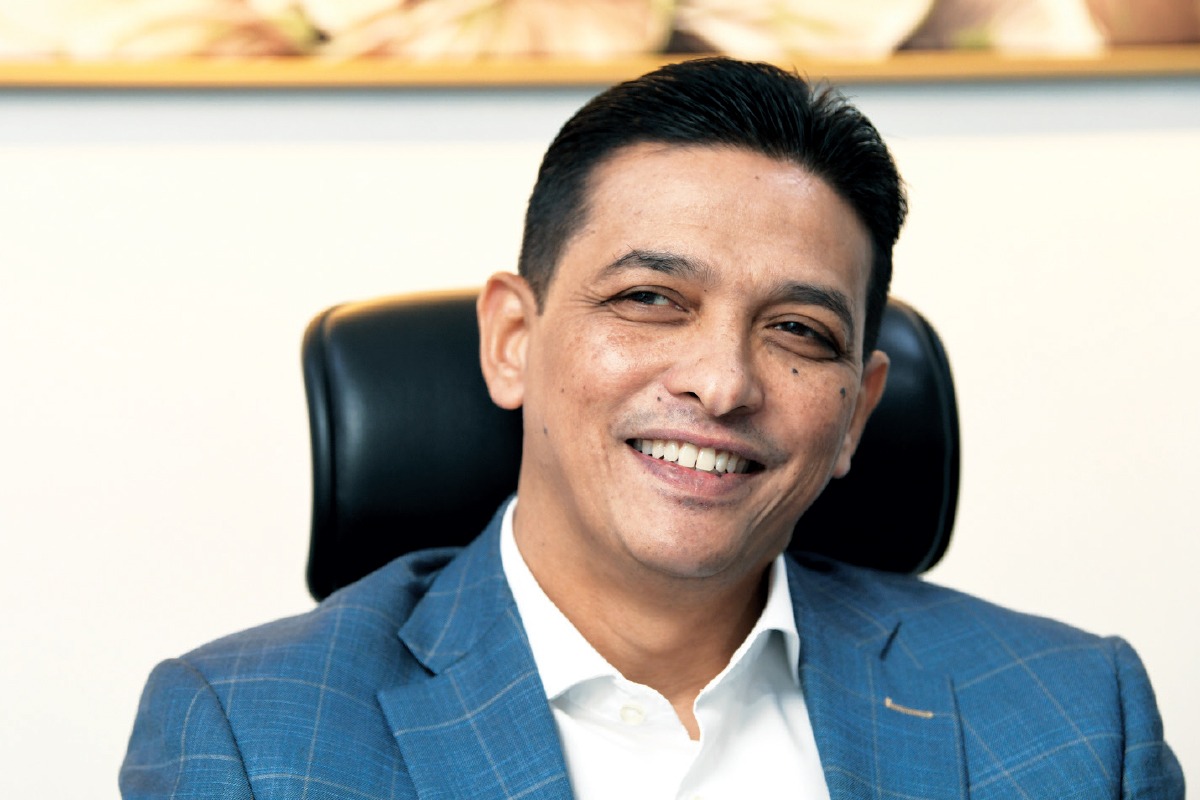
“We’re in talks with the Ministry of Health (MoH) to show that Pharmaniaga has the capability and capacity to meet national insulin demand,” says managing director Datuk Zulkifli Jafar in an interview.
“We hope to secure 100% of the contract, which would help us to lower production costs through scale.”
Zulkifli, a lawyer by training who took over the helm at the company a year ago, explains that localising the biopharma products will enable cost savings.

“At the same time it is for national health security of not being dependent on imports and building up local player capabilities in the biopharmaceutical (biopharma) space,” he says.
Notably, Pharmaniaga has been granted a seven-year concession contract to provide logistics services to supply medicine and medical devices to the MoH from July 1, 2023 to June 30, 2030.
Meanwhile, Biocon Malaysia is currently the main supplier of human insulin to MoH. The pharmaceutical group, which is owned by India’s Biocon Biologics Ltd, distributes its insulin through its commercial partner Duopharma Marketing Sdn Bhd. Biocon has manufacturing facilities in Johor to supply to the domestic and global markets.
It was reported that there was a shortage of insulin in the country last year. Under the current MoH contract, the insulin procurement is split between Biocon and Novo Nordisk Pharma (Malaysia) Sdn Bhd in the ratio of 80:20. The contract’s tenure was between April 2022 and April 2025. It has been extended until the end of next month, pending the outcome of the new tender.
Simply put, the MoH’s insulin supply contract will be crucial to Pharmaniaga’s biopharma manufacturing operation. The contract would enable it to achieve the economies of scale to make it more competitive in the international markets.
Biopharmaceuticals involve the production of critical medical treatments such as vaccines and targeted therapies for diseases like diabetes. Unlike conventional pharmaceuticals, biopharma products are derived from living organisms and require highly specialised facilities, equipment and expertise.
“Biopharma is where [the] real growth lies but it’s not an easy space to enter. The barriers to entry are extremely high, especially from a cost and regulatory perspective,” Zulkifli says. “That’s why in Malaysia, there is only one local player in this space — and it is us.”
Pharmaniaga’s journey into biopharma began in 2018 with a RM300 million investment in its Puchong facility, focusing on small-volume injectables, vaccines and insulin. The plant has an annual production capacity of up to 25 million doses of human insulin. It is also able to manufacture vaccines.
The commissioning of the Puchong plant was delayed by the Covid-19 pandemic. It came online in November last year.
Pharmaniaga is also in the process of developing seven vaccines that will be commercialised in stages, starting with human papillomavirus, also known as HPV, and hexavalent vaccines for childhood immunisation, protecting against six diseases including tetanus, hepatitis B and influenza.
According to Zulkifli, Malaysia imports most of the vaccines it needs under the National Immunisation Programme, costing the government RM250 million annually.
Nonetheless, Zulkifli stresses that the group’s biopharma strategy goes beyond government tender. Although it would be helpful for the group to achieve economies of scale, the strategy is also to market its biopharma products in the private market and outside of Malaysia.
“Our insulin strategy goes beyond the government tender. We are aiming to serve teaching hospitals, military institutions and regional markets. Any products that we produce or intend to market in Malaysia, we make sure that they are also capable of being marketed in Indonesia,” Zulkifli says.
The group is also eyeing Indonesia, where it already has an operation, as well as a new market in Central Asia, to market its human insulin. Pharmaniaga is in the process of securing halal certification for its insulin — a move that could set it apart globally.
“Once approved, we’ll be the first producer of halal-certified human insulin in the world,” he says. “All our plants in Malaysia are already halal-certified, with the halal certification for our insulin, it will give us a strong advantage.”
The group’s operation in Indonesia is through its 73%-owned PT Millennium Pharmacon International Tbk, which is publicly traded on the Jakarta Stock Exchange. PT Millennium Pharmacon, which has a market capitalisation of RM43.96 million, handles the distribution of drugs and medical supplies in Indonesia, mainly for private hospitals.
Back at home, he says Pharmaniaga is the biggest manufacturer of the diabetes medication metformin in Malaysia, with 45% market share.
Clearing the PN17 hurdle
Pharmaniaga’s adjusted share price has gained almost 63% in just one month to 28.5 sen apiece at last Thursday’s close, giving it a market capitalisation of RM1.87 billion.
“We [have] submitted the regularisation plan for approval to Bursa Malaysia. We are hoping to get the approval by the first quarter of 2026,” Zulkifli says.
Pharmaniaga returned to the black in the first quarter ended March 31, 2024 (1QFY2024), and has remained profitable for six consecutive quarters. But to exit the PN17 status, Pharmaniaga requires two consecutive quarters of profit after the regularisation plan is completed.
Apart from addressing its PN17 status, Zulkifli says the group has been strengthening its internal processes to make sure that the Covid-19 vaccines episode is not repeated.
Reflecting on the pandemic period, Zulkifli highlighted how Pharmaniaga was significantly impacted by changes in policy. The company had procured and distributed Sinovac vaccines to about 11 million people nationwide, anticipating consistent demand for follow-up booster doses. “[Logically], those who took Sinovac for their initial dose would require the same for their boosters. But when the government later allowed mix-and-match booster shots, that hit us hard.”
The policy shift led to a drop in demand for Sinovac boosters, leaving Pharmaniaga with unused stock and financial exposure.
“That experience taught us a lot. Today, we don’t make procurement decisions lightly or without proper evaluation,” Zulkifli says.
Following the fundraising exercise, Pharmaniaga saw the emergence of a new substantial shareholder Jakel Capital Sdn Bhd with 10% stake, making the group the second largest shareholder after Boustead Holdings Bhd with 24.68% stake.
The proceeds from the fundraising are expected to be utilised for repayment of some borrowings and capital expenditure to build or acquire new warehouses and for the product development of vaccines, insulin and other generic drugs and for working capital purposes.
For the first half of the financial year ended June 30, 2025 (FY2025), Pharmaniaga’s net profit grew 18% to RM33.54 million from RM28.44 million a year earlier, backed by a 10% increase in revenue to RM1.98 billion from RM1.8 billion previously, driven by its manufacturing arm.
Its borrowings stood at RM1.16 billion and payables at RM959.61 million as at June 30, 2025. Zulkifli notes that the group has pared down RM250 million of debt after the completion of the fundraising exercise.
“We will gradually reduce our borrowings to achieve a 1.8 times gearing ratio from the current two times,” he says.
During the period under review, the group’s operations improved significantly, posting operational profits of RM22.20 million in the first quarter (1Q) and RM21.36 million in 2Q, compared with operational losses of RM55.39 million and RM63.73 million, respectively, in the corresponding quarters last year.
“We have improved our logistics operations and reduced our stock holdings. Coupled with the debt repayment, we are looking at savings of RM23 million this year,” says Zulkifli.
Misunderstood business model
Pharmaniaga has two core segments: logistics and distribution; and manufacturing, Zulkifli explains. “Logistics is a single-digit margin business, that is just the nature of the industry.”
However, he points out that the way revenue is reported often leads to confusion. “People see us posting RM3.7 billion in revenue and wonder why we’re only making RM27 million in profit. That leads to the wrong perception — that the company is mismanaged or inefficient.”
He clarifies that logistics revenue is largely pass-through. “For example, we might purchase RM70 million worth of medicines and that full amount gets booked as revenue. But in reality, our income is just a small fixed distribution fee per SKU (stock-keeping unit).
“There’s no component of manufacturing in the concession agreement. The concession is purely for logistics and distribution,” he explains. “The government pays us a fixed fee per SKU to store and distribute medicines. That’s it.”
Under the previous concession cycle, Pharmaniaga was paid based on a percentage markup. But under the current agreement — the third cycle, which runs until 2030 — the company is paid a fixed fee per item, regardless of the cost of the product.
In fact, to supply its own manufactured products to MoH, Pharmaniaga must compete in open tenders, just like other manufacturers.
“Many think we’re generating RM3.7 billion in revenue and question why our profits are low. What they don’t realise is that logistics revenue includes pass-throughs — we might book RM70 million in medicine purchases but our actual income is just the logistical fixed fee.”
Under the government concession, Pharmaniaga is paid a fixed distribution fee per SKU — not based on product sales. “There is no manufacturing component in the concession,” Zulkifli clarifies.
He notes that public perception often compares Pharmaniaga with companies like Duopharma Biotech Bhd (KL:DPHARMA), which is purely a manufacturing business.
“We’re an integrated company — logistics plus manufacturing. But once people understand the concession structure, they see the business differently.”
Last year, about 60% of Pharmaniaga’s revenue came from its logistics operations and 40% from manufacturing.
“Eventually, we want manufacturing to contribute 70% of our revenue,” he says. “And biopharma will be the key driver.”
The group has also exited several low-return businesses, including biomedical devices and nutraceuticals, which are very competitive.
“Moving forward, our priority is to grow our manufacturing arm, especially in biopharmaceuticals.”
Save by subscribing to us for your print and/or digital copy.
P/S: The Edge is also available on Apple's App Store and Android's Google Play.
The content is a snapshot from Publisher. Refer to the original content for accurate info. Contact us for any changes.
Related Stocks
Comments