REITS & PLANTATIONS: Plantation and REIT indices led Bursa Malaysia
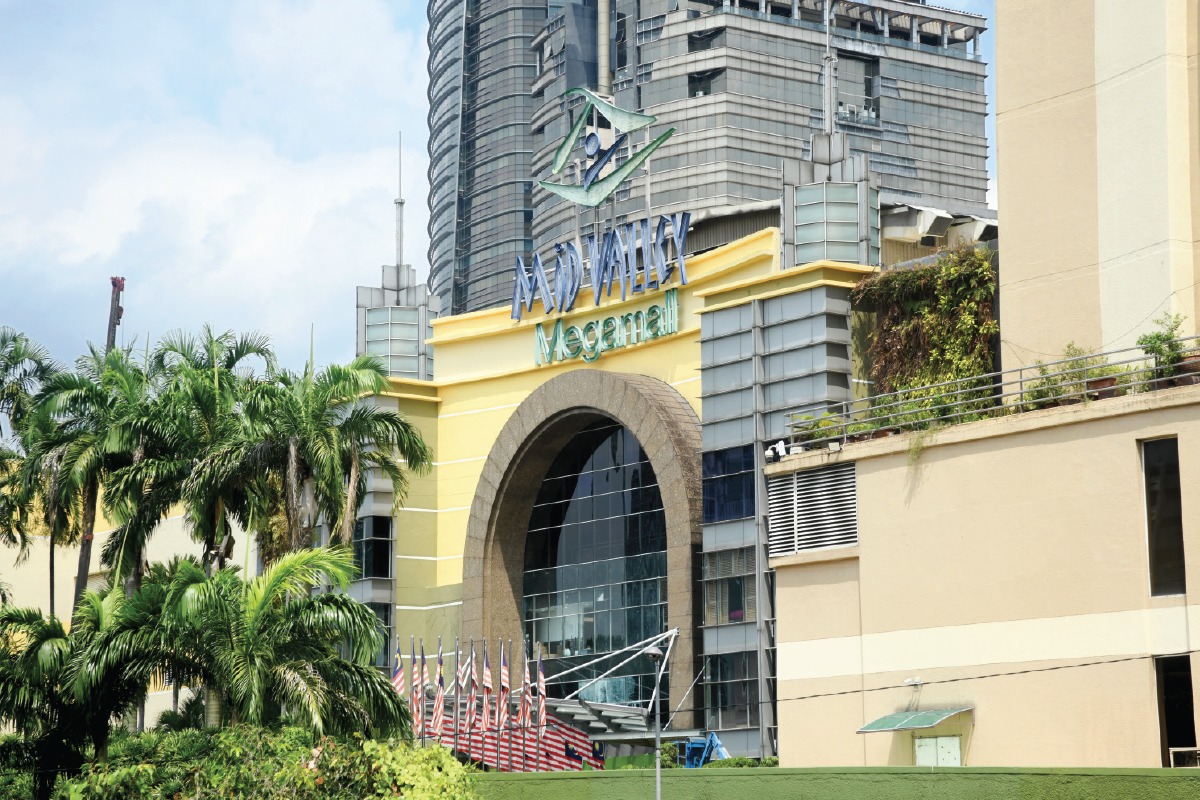
This article first appeared in Capital, The Edge Malaysia Weekly on December 29, 2025 - January 4, 2026
THE Bursa Malaysia Plantation and Real Estate Investment Trusts (REIT) indices emerged as the top-performing sectors on Bursa Malaysia in 2025 on a year-to-date (YTD) basis (as of Dec 19), outperforming the benchmark FBM KLCI due to the broad-based weakness across most industries.
Only three sectoral indices — plantation, REITs and financials — ended the year in positive territory (see chart). Healthcare was the worst-performing index for the year, weighed down by earnings pressure and subdued investor sentiment.
The REIT sector stood out with 7.59% growth, driven by central banks’ easing monetary policy that boosted demand for yield-generating assets. Interest rate cuts lowered financing costs, and stable income visibility attracted investors to the sector despite the challenging market conditions.
Bank Negara Malaysia cut the Overnight Policy Rate (OPR) by 25 basis points to 2.75% in July, and has kept the rate steady since then. In the US, the Federal Reserve lowered its key interest rate by 25 bps to the range of 3.50% to 3.75%, the third cut this year.
Among the leading gainers in the REIT space were IGB REIT (KL:IGBREIT), Sunway REIT (KL:SUNREIT) and Al-Salam REIT (KL:ALSREIT), which posted strong price appreciations this year as sentiment shifted toward commercial and retail assets.
As at Dec 19, IGB REIT gained 32.1% YTD, followed by Sunway REIT at 30.7% and Al-Salam REIT at 27.4%. YTD, IGB REIT has distributed a total 8.78 sen per unit, translating into a 3.3% yield based on its last closing price of RM2.70 on Dec 19. Sunway REIT, meanwhile, paid 5.68 sen per unit, representing a 2.5% yield based on its closing price of RM2.25. Al-Salam REIT declared a 1.5 sen per unit distribution, which translates into a 3.3% yield based on its unit price of 48 sen.

This was despite the impact of economic reforms that led to higher minimum wages, the sales and service tax, expansion on rentals, and higher base electricity tariff.
“We continue to see M-REITs (Malaysian REITs) as a defensive play for investors seeking stable, domestic-centric income. Sector fundamentals remain intact, with high occupancies and good earnings visibility.
“A lower interest-rate environment is supportive for REITs too, reducing borrowing costs and improving the ability to refinance debt, potentially embarking on more acquisitions,” says RHB Research in a report dated Dec 16.
The research house notes that five of the eight REITs under its coverage met earnings expectations in the third quarter of 2025, while the other three exceeded them, with Sunway REIT the “standout”.
For the third quarter ended Sept 30, 2025, Sunway REIT posted a 25.3% jump in net property income to RM180.9 million, on the back of a 23% increase in revenue to RM236.4 million from RM192.1 million a year earlier. Profits for the quarter surged 43.2% to RM127.68 million compared with RM89.14 million a year earlier, supported by full-quarter contributions from new retail and industrial assets, alongside a RM21 million realised net gain from the disposal of Sunway University & College campus.
Moving into 2026, RHB is maintaining its “overweight” call on the sector, supported by the lower interest rate environment as well as Visit Malaysia 2026 (VM2026), the National Energy Transition Roadmap and the New Industrial Master Plan 2030, which will provide incremental support for retail and industrial REITs.
“Additionally, 2026 could also see a wave of REIT listings by large developers; in aggregate, we estimate RM10 billion to RM11 billion of assets to enter the market through these exercises,” it says.
RHB’s top pick for the sector is Pavilion REIT Pavilion REIT (KL:PAVREIT), given its larger floating-rate exposure and strong retail positioning to capture VM2026-related tourist arrivals.
For the first nine-month of 2025, Pavilion REIT has distributed a total of 4.97 sen, which translates to 2.8% dividend yield based on its closing price of RM1.80 per share on Dec 19.
It should be noted that Pavilion REIT is the fourth top-performing REIT this year, gaining 23.7% to reach RM1.80 a unit on Dec 19.
Separately, Hong Leong Investment Bank (HLIB) Research had Sunway REIT and Pavilion REIT as its top picks. “Sunway REIT remains our top pick, backed by its well-diversified portfolio across four asset classes and a visible pipeline of high-quality asset injections that should strengthen earnings resilience,” it said in a note to clients on Dec 16.
On Pavilion REIT, the research house has forecasted a higher target price of RM2.02 per unit, on the view that the group’s prospects remain favourable, supported by a constructive tourism outlook that is expected to drive higher footfall and spending at its flagship assets including Pavilion KL and Pavilion Elite.
HLIB Research is also “overweight” on the REIT sector, underpinned by its inherent defensive characteristics, resilient income profile and attractive valuations, with REITs under its coverage currently trading at a one standard deviation yield spread above the 10-year Malaysian Government Securities and low interest rate environment.
Plantation stocks shined in late-2025
Bursa Malaysia Plantation Index overtook Bursa Malaysia REIT Index just weeks before the end of 2025, underscoring investors’ preference for defensive and income-oriented sectors amid ongoing market uncertainty.

The plantation sector’s late-year surge was driven largely by firmer crude palm oil (CPO) prices, resilient export demand and expectations of stable margins heading into 2026.
On the domestic front, planters benefited from relatively stable production levels and easing cost pressures following earlier spikes in fertiliser and labour expenses. While policy-related challenges such as including higher minimum wages and compliance costs remained, these were partly offset by improved operational efficiencies and stronger CPO prices.
Large-cap plantation stocks led the index, with investors gravitating toward names offering stronger balance sheets, consistent dividend payouts and earnings resilience.
United Plantations Bhd (KL:UTDPLT), for instance, gained 51.4% to reach RM29.90 a share on Dec 19, making it the biggest mover for the plantation index. This was followed by SD Guthrie Bhd (KL:SDG), whose share price surged 16.3% this year to RM5.53 on Dec 19.
Nevertheless, the small-to-mid capitalisation plantation companies stood out amid strong investor interest in the sector, namely Gopeng Bhd (KL:GOPENG), Harn Len Corp Bhd (KL:HARNLEN) and Negri Sembilan Oil Palms Bhd (KL:NSOP).
Gopeng emerged as a top gainer among the plantation companies, with its share price surging 67.3% to 84 sen on Dec 19, giving it a market capitalisation of RM338.9 million. Not far behind, Harn Len’s share price gained 64.9% ahead of Negri Sembilan Oil Palms’ 55.6% YTD jump.
This was despite many analysts having a “neutral” view on the sector since the beginning of the year, citing the “lack of new catalysts” and subdued CPO prices.
Although CPO prices have shown some weakness, they have stayed above RM4,000 per tonne for most of 2025.
Additionally, a number of plantation companies with a strong cash position and relatively low debt also drew market attention. Based on data compiled by The Edge, of the 42 Bursa Malaysia-listed plantation counters, about 25 companies were in a net cash position as per their latest reported financial statements, with some even having cash reserves that exceeded their total liabilities.
One standout is Sarawak Oil Palms Bhd (KL:SOP), which had net cash of RM1.28 billion as at Sept 30, followed by Hap Seng Plantations Holdings Bhd (KL:HSPLANT) — the plantation arm of the diversified Hap Seng Consolidated Bhd (KL:HAPSENG) — with net cash of RM646.47 million and no borrowings. This net surplus puts the companies in a position to maintain dividends, even during years of softer earnings.
Moving into 2026, Indonesia’s large-scale seizure of illegal plantations could impact the country’s palm oil production in the coming years, as these estates are being transferred to state-owned firm Agrinas Palma Nusantara. The firm was set up earlier this year, making it the world’s largest palm oil company by land size.
Analysts see upward pressure on CPO prices on the back of the military-backed seizures alongside the country’s biodiesel plan. Indonesia currently mandates a B40 palm biodiesel blend but it has plans to launch B50 next year.
CIMB Securities Research expects CPO prices to remain supported above RM4,000 per tonne, with an average of RM4,200 per tonne forecast in 2026, which is a boon for the plantation sector.
One of its picks is SD Guthrie with a target price of RM6.01, on the expectation that the group’s earnings will be poised to benefit not only from firm CPO prices, but also from land sale gains arising from its ongoing land monetisation plans.
It also recommended a “buy” call on IOI Corp Bhd (KL:IOICORP) with target price of RM4.51, and Hap Seng Plantation at RM2.45 per share.
“We like IOI Corp as it is less exposed to regulatory risks in Indonesia, given its comparatively smaller footprint there among the large-cap planters,” CIMB said in a report dated Dec 10.
On the other hand, TA Securities has a “neutral” call on the plantation sector as it expects CPO prices to moderate, averaging at RM4,000 per tonne, despite demand growth remaining firm.
“The easing price outlook is underpinned by rising global production, softer export demand, particularly from key importers such as China and India, and intensifying competition from alternative edible oils as supply recovers in sunflower and soybean-producing regions.
“While production growth should support overall yields, the softer price environment would likely keep upstream margins contained, especially for producers with higher cost structures,” the research house says in a Dec 17 report.
It has a “buy” call on Kuala Lumpur Kepong Bhd (KL:KLK) at a target price of RM23.09 per share, and TSH Resources Bhd (KL:TSH) at RM5.63. It suggests investors “hold” SD Guthrie and United Malacca Bhd (KL:UMCCA). However, the research house recommends a “sell” call on IOI Corp and Kim Loong Resources Bhd (KL:KMLOONG) due to high valuations.
Save by subscribing to us for your print and/or digital copy.
P/S: The Edge is also available on Apple's App Store and Android's Google Play.
The content is a snapshot from Publisher. Refer to the original content for accurate info. Contact us for any changes.
Related Stocks
| ALSREIT | 0.460 |
| BURSA | 8.830 |
| CIMB | 7.970 |
| FBMKLCI | 1718.060 |
| GOPENG | 0.825 |
| HAPSENG | 2.780 |
| HARNLEN | 0.675 |
| HARNLEN-WB | 0.430 |
| HSPLANT | 2.150 |
| IGBB | 3.740 |
| IGBREIT | 2.800 |
| IOICORP | 3.910 |
| KLK | 19.360 |
| KMLOONG | 2.360 |
| NSOP | 5.600 |
| PAVREIT | 1.850 |
| REIT | 971.440 |
| SDG | 5.600 |
| SOP | 4.100 |
| SUNREIT | 2.450 |
| SUNWAY | 5.630 |
| TSH | 1.220 |
| UMCCA | 5.750 |
| UTDPLT | 30.280 |
Comments